

It took three decades, three departed sports franchises, and $340 million in taxpayer-backed bonds, but Oakland and Alameda County finally closed the book on one of the most controversial municipal debt burdens in American sports history. In January 2026, the Oakland-Alameda County Coliseum Authority made its final payment on bonds used to renovate the Oakland Arena: just months after paying off the infamous "Mount Davis" bonds in February 2025 (San Francisco Business Times) [1]. The last dollar is paid, but the real question isn't about what was lost. It's about what comes next.
For general contractors, developers, and construction professionals watching the Bay Area's rapidly evolving landscape, the Coliseum site represents something far bigger than sports nostalgia. This is 112 acres of prime East Bay real estate, now unshackled from generational debt and poised for a massive transformation. The African American Sports & Entertainment Group (AASEG) is leading a reported multi-billion-dollar redevelopment vision that includes 14,500 jobs, 25% affordable housing, mixed-use retail, hotels, and community-centered sports facilities. If it happens, this will be one of the largest urban development projects in Oakland's modern history: and a case study in how cities can pivot from single-use infrastructure bets to diversified, community-led economic engines.
Oakland's Coliseum debt payoff marks the end of a failed municipal sports strategy and the beginning of a community-focused redevelopment opportunity that could redefine East Bay construction and economic development for the next generation.
The 30-Year Bet: How We Got Here
The story starts in 1995, when Oakland and Alameda County made a high-stakes wager: spend big to bring the NFL's Raiders back from Los Angeles. The deal required issuing $197.7 million in bonds to finance stadium renovations, including the construction of luxury suites and upper-deck seating that would come to be known as "Mount Davis" (San Francisco Business Times) [1]. An additional $140 million in bonds followed in 1996 to renovate the arena, with the goal of keeping the NBA's Golden State Warriors on-site (San Francisco Business Times) [1].
The financing model hinged on optimistic projections: personal seat licenses, ticket sales, and naming rights would generate enough revenue to cover bond payments without touching the city or county's general funds. But reality fell short. Seat license sales flopped, and by the early 2000s, both jurisdictions were forced to divert general fund dollars to cover the shortfall: money that could have gone to schools, public safety, and infrastructure (San Francisco Business Times) [1].
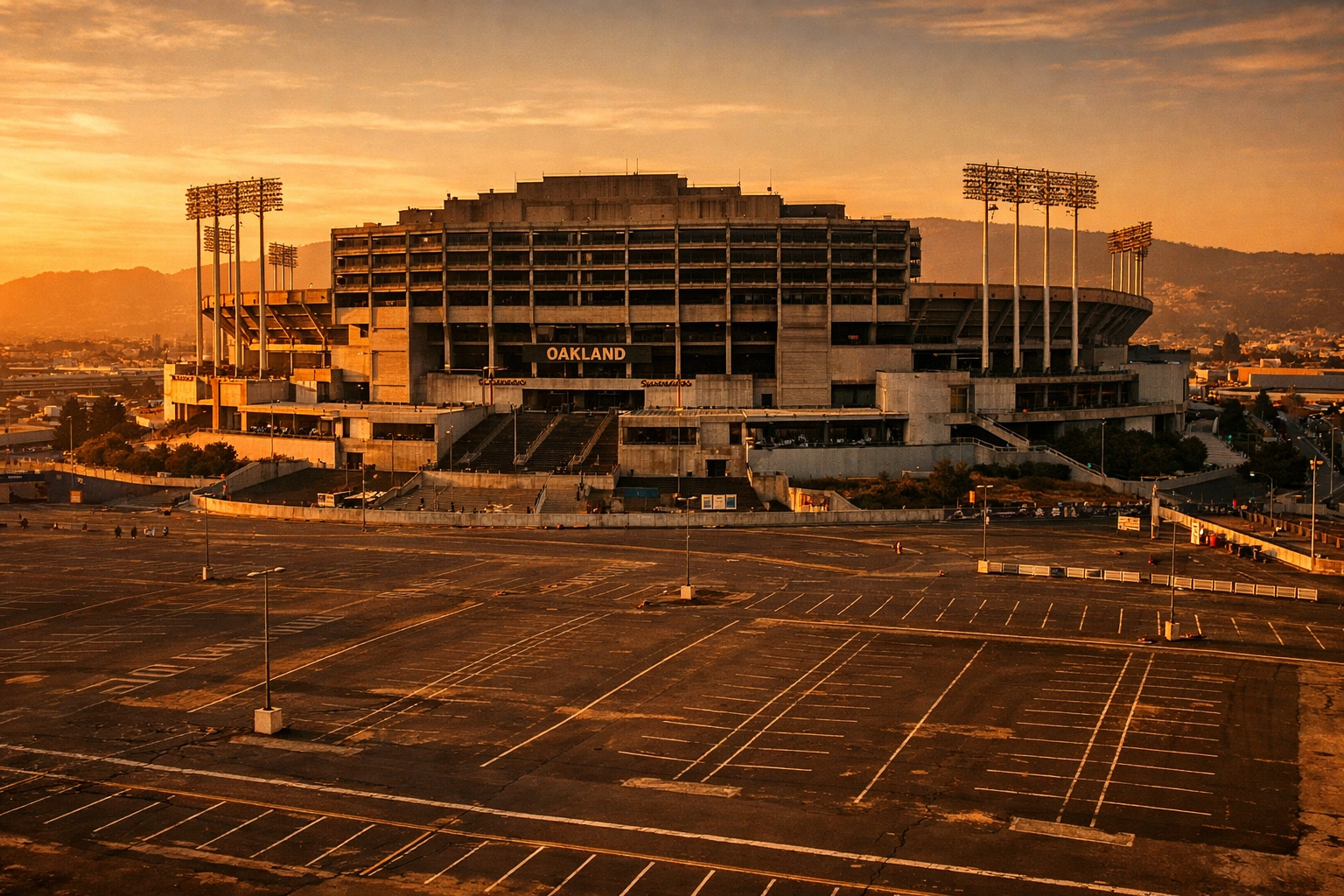
In total, the authority sold $340 million in bonds over the course of the project (Oakland Coliseum Authority) [2]. The debt became a "generational millstone," restricting the authority's ability to redevelop or sell the property because the bonds were backed by revenue from events and attendance (San Francisco Business Times) [1].
Mount Davis and Broken Promises
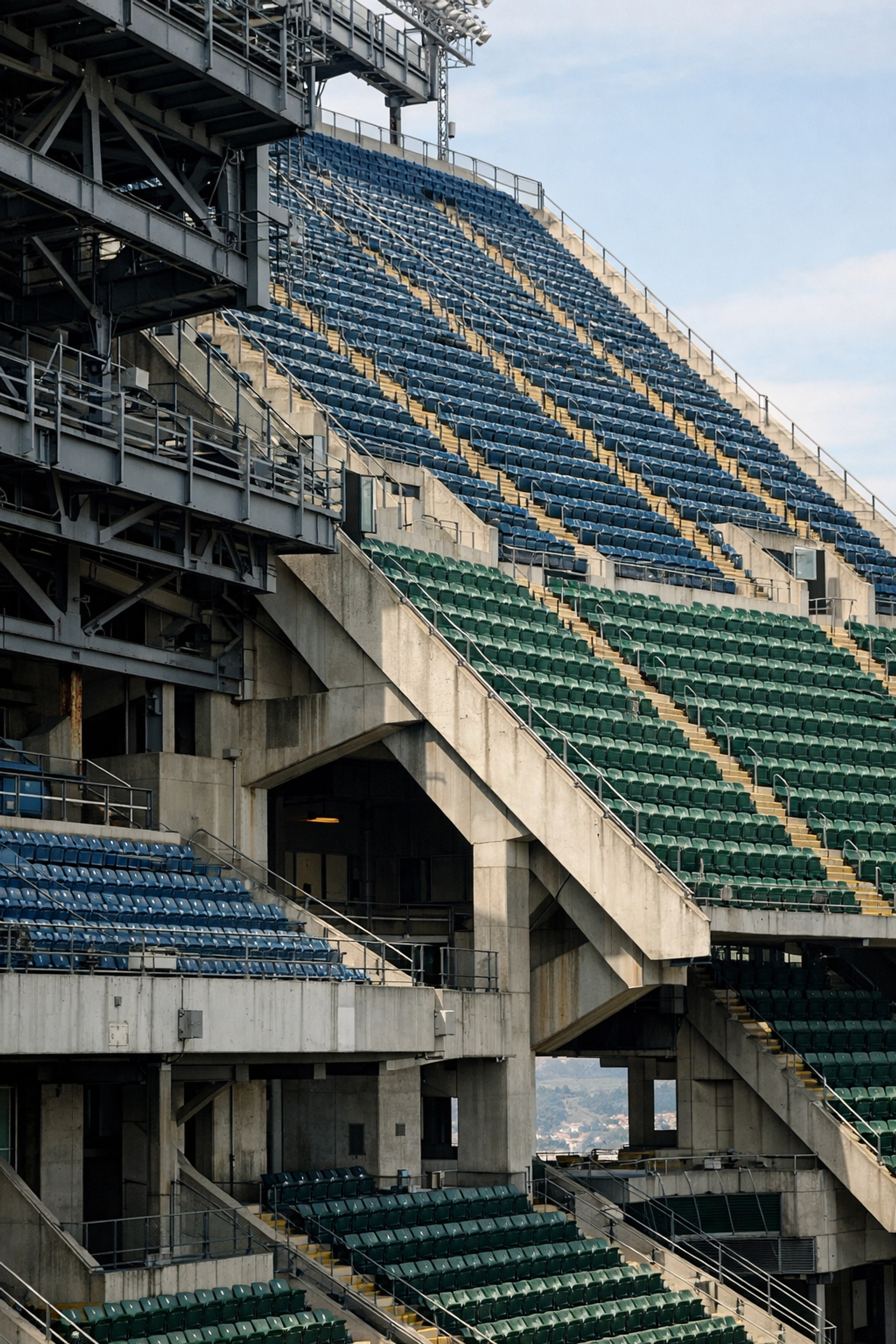
Let's talk about Mount Davis. Named after Raiders owner Al Davis, this massive addition to the Coliseum was designed to add 10,000 seats and 80 luxury suites. The cost? Nearly $200 million in taxpayer-backed debt. The result? A structure so large it blocked the iconic view of the Oakland Hills and created a sea of nosebleed seats that rarely filled (San Francisco Business Times) [1].
Critics called it one of the worst stadium deals in American sports history. The city and county handed Al Davis parking revenue, suite income, and control over key financial levers: while taxpayers absorbed the risk. When seat license sales failed to materialize as promised, Oakland was left holding the bag (San Francisco Business Times) [1].
The deal also set a precedent for what happens when municipalities overextend themselves for professional sports teams. Oakland essentially mortgaged its future on the promise that the Raiders, Warriors, and A's would remain loyal tenants. Spoiler: they didn't.
The Great Exodus: When Three Teams Left
By 2019, the writing was on the wall. The Golden State Warriors opened the privately financed Chase Center in San Francisco's Mission Bay, ending their 47-year run at the Coliseum complex. The team was later ordered to make annual payments to the Coliseum Authority for its share of arena improvements: a small consolation (San Francisco Business Times) [1].
The Raiders, under Mark Davis, decamped for a shiny new stadium in Las Vegas after the 2019 season, ending Oakland's second stint with the franchise (San Francisco Business Times) [1]. And in 2024, the Oakland Athletics: who had shared the Coliseum with the Raiders since 1968: left for West Sacramento, with plans to eventually relocate to a taxpayer-backed stadium in Las Vegas by 2028 (San Francisco Business Times) [1].
Three franchises. Three exits. One city left with a debt it couldn't shake and a complex it couldn't easily redevelop.
The Numbers Tell the Story
| Metric | Details |
|---|---|
| Total Bond Debt | $340 million (arena + stadium) |
| Arena Bonds (1996) | $140 million to renovate Oakland Arena |
| Stadium Bonds (1995) | $197.7 million for Mount Davis and Coliseum upgrades |
| Final Payment Date | January 2026 (arena bonds), February 2025 (stadium bonds) |
| Property Size | 112 acres |
| Current Ownership Status | Transitioning from city/county to AASEG/OAC (pending) |
| AASEG Development Vision | Multi-billion-dollar mixed-use redevelopment |
| Projected Jobs | 14,500 |
| Affordable Housing Target | 25% of residential units |
Sources: San Francisco Business Times [1], Oakland-Alameda County Coliseum Authority [2]
What Comes Next: AASEG's Vision
Here's where the story pivots from cautionary tale to potential comeback. With the bond debt finally cleared, the Coliseum site is free to be redeveloped. The African American Sports & Entertainment Group (AASEG), led by Ray Bobbitt, has negotiated a deal to purchase the city and county's ownership stakes for a combined total of approximately $235 million (Oakland City Council records) [3].
AASEG's vision is ambitious: a mixed-use sports and entertainment complex that includes residential housing (with 25% designated as affordable), hotels, retail, restaurants, and community-centered sports facilities (AASEG development proposals) [4]. The group has also projected the development could create 14,500 jobs and serve as an economic anchor for East Oakland.
The deal isn't without complications. AASEG has been slow in making scheduled early payments, and the Oakland A's affiliate, Coliseum Way Partners, must also be paid off as part of the county's ownership transition (San Francisco Business Times) [1]. County officials approved a conditional agreement in 2025 to buy back the county's 50% stake from the A's and then sell it to AASEG's OAC entity (Alameda County Board of Supervisors) [3].
The deals could close by June 2026, setting the stage for construction to begin in earnest.
Oakland Roots: Keeping the Spirit Alive
While the A's, Raiders, and Warriors have moved on, one team is staying put: the Oakland Roots. This United Soccer League club, along with its women's counterpart, the Oakland Soul, signed a special event agreement to play 16 dates at the Coliseum from mid-March to October 2026 (San Francisco Business Times) [1].
The Roots have also leased the former Raiders administrative offices and training facility in Alameda and were recently selected by the Port of Oakland to redevelop part of the Howard Terminal site: originally planned for the A's. The Roots plan to build a temporary stadium for 15,000 fans, eventually expanding capacity to 25,000 (Port of Oakland) [5].
In many ways, the Roots represent the kind of grassroots, community-focused sports franchise Oakland has been waiting for: one that sees its future tied to the city's success, not just its own bottom line.
Why This Matters for Development
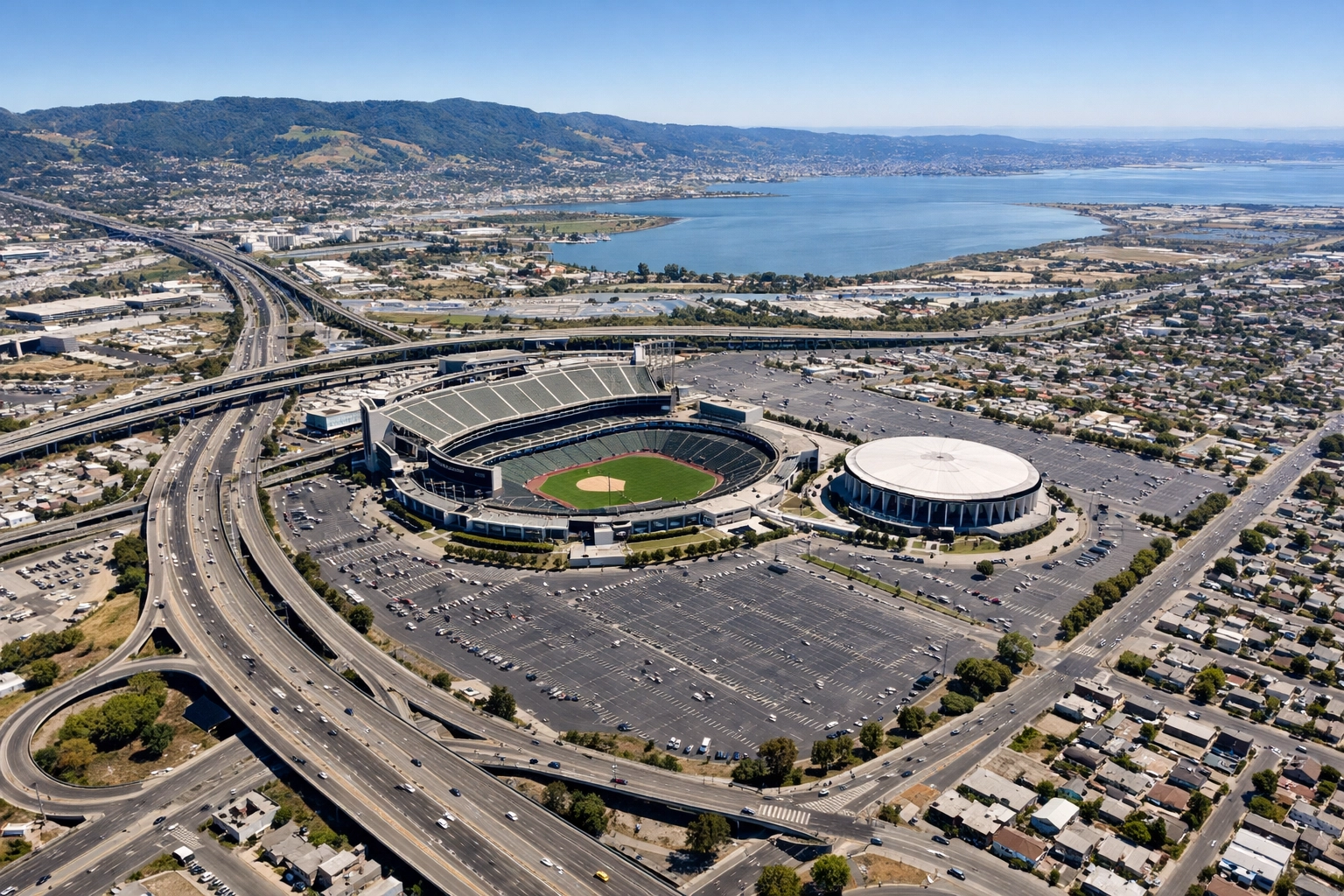
For contractors, developers, and construction professionals, the Coliseum site is a massive opportunity. At 112 acres, it's one of the largest undeveloped parcels in the East Bay with direct freeway access, BART connectivity, and proximity to Oakland International Airport. The site's single-use sports infrastructure is outdated, but its bones: utilities, transportation access, and adjacency to residential neighborhoods: are solid.
The shift from a single-tenant sports venue to a mixed-use development also reflects broader trends in urban planning. Cities are moving away from megaproject stadiums that sit empty 300 days a year and toward multi-use, community-serving spaces that generate consistent foot traffic, tax revenue, and jobs.
If AASEG can execute its vision, the Coliseum redevelopment could serve as a blueprint for how other cities manage the transition from legacy sports infrastructure to modern, diversified economic hubs.
What Smart Critics Argue
Not everyone is convinced AASEG can deliver. Critics point to the group's delayed early payments and lack of detailed construction timelines as red flags. There's also concern that the projected job numbers and affordable housing targets are aspirational rather than binding commitments.
Some urban planning experts argue that Oakland should have pursued a more transparent public bidding process rather than negotiating directly with AASEG. Others worry that without strict community benefit agreements, the redevelopment could lead to displacement in surrounding neighborhoods.
These are valid concerns. However, the alternative: leaving the site undeveloped and continuing to bleed general fund dollars on maintenance: isn't viable either. The key will be strong oversight, enforceable community benefits, and a construction timeline that holds developers accountable.
Key Takeaways
- Oakland and Alameda County paid off $340 million in Coliseum bond debt in early 2026, ending a 30-year financial burden tied to the failed bet on keeping pro sports teams.
- Mount Davis cost nearly $200 million and is widely considered one of the worst stadium deals in U.S. history due to broken revenue promises and blocked views.
- All three major sports franchises left Oakland (Warriors in 2019, Raiders in 2019, A's in 2024), but the debt remained.
- AASEG is negotiating to purchase the site for approximately $235 million and plans a multi-billion-dollar mixed-use redevelopment with 14,500 jobs and 25% affordable housing.
- The Oakland Roots soccer club is staying, playing 16 dates at the Coliseum in 2026 and redeveloping Howard Terminal.
- The Coliseum site is 112 acres of prime East Bay real estate with BART access, freeway connectivity, and massive redevelopment potential.
- This shift represents a broader trend: cities moving from single-use sports infrastructure to diversified, community-centered economic hubs.
What to Do Next
If you're a contractor, developer, or construction professional interested in the Coliseum project or similar large-scale urban redevelopments, here's how to position yourself:
- Monitor AASEG's ownership transition timeline. The deals are expected to close by June 2026. Track Oakland City Council and Alameda County Board of Supervisors meetings for updates.
- Build relationships with community stakeholders. Any major development on this site will require strong community support. Connect with East Oakland neighborhood groups and business associations now.
- Study the affordable housing requirements. AASEG has committed to 25% affordable units. Contractors with experience in mixed-income housing projects will have an edge.
- Prepare for phased construction. A project of this scale won't happen overnight. Expect multi-phase development over 10+ years. Position your firm for long-term engagement.
- Stay informed on financing structures. AASEG will likely pursue a mix of private investment, tax credits, and public incentives. Understanding these tools will help you navigate bid processes.
- Follow the Oakland Roots' Howard Terminal project. This separate development will offer near-term opportunities and could serve as a proof-of-concept for AASEG's broader vision.
- Attend public hearings and comment periods. Oakland's planning process will include multiple opportunities for public input. Show up, ask questions, and demonstrate your expertise.
- Partner with local firms. AASEG has emphasized community benefits and local hiring. Establish partnerships with Oakland-based contractors and suppliers.
- Prepare for sustainability requirements. Large-scale urban developments increasingly face strict environmental standards. Ensure your firm is equipped to meet LEED or equivalent certifications.
- Stay flexible. Timelines will shift, financing will evolve, and designs will change. Firms that can adapt quickly will win the work.
Ready to be part of Oakland's next chapter? At Atlas Premier Services & Consultants, we specialize in navigating complex urban construction projects from concept to completion. Whether you're a property owner exploring redevelopment opportunities or a general contractor looking to partner on large-scale projects, we bring the expertise, relationships, and execution you need.
Contact APSC today to discuss how we can support your next project:
📞 (510) 726-2433
📧 info@atlas-premier.com
🌐 www.atlas-premier.com
About Atlas Premier Services & Consultants
Atlas Premier Services & Consultants is a full-service general contracting firm serving the San Francisco Bay Area. We specialize in commercial build-outs, tenant improvements, and complex urban construction projects that require precision, collaboration, and community engagement. Our mission is to deliver exceptional craftsmanship while building lasting relationships with clients, partners, and the communities we serve.
Service Areas: San Francisco, Oakland, Berkeley, Alameda County, Contra Costa County, and the greater Bay Area.
Researched by APSC Staff
Based on reporting by Ron Leuty, Senior Reporter, San Francisco Business Times
Sources
[1] Ron Leuty, "After 30 years, Oakland's bad bet on pro sports is finally paid off. What comes next for Coliseum complex?" San Francisco Business Times, February 19, 2026, https://www.bizjournals.com/sanfrancisco/news/2026/02/19/oakland-coliseum-bonds-paid-off.html, Accessed February 19, 2026.
[2] Oakland-Alameda County Coliseum Authority, "Board Meeting Materials: Bond Payment Summary," January 2026, Official Authority Records, Accessed February 19, 2026.
[3] Alameda County Board of Supervisors, "Conditional Agreement for Coliseum Property Buyback and Sale," July 2025, Public Records, Accessed February 19, 2026.
[4] African American Sports & Entertainment Group (AASEG), "Coliseum Redevelopment Vision: Mixed-Use Development Proposal," 2025, Development Proposal Documents, Accessed February 19, 2026.
[5] Port of Oakland, "Howard Terminal Site Selection: Oakland Roots Sports Club," January 2026, Port Commission Records, Accessed February 19, 2026.
Annotated Source List
- San Francisco Business Times (Ron Leuty) – Primary reporting on the Coliseum bond payoff, historical context, and ownership transitions. Provides the most comprehensive timeline of events and financial details.
- Oakland-Alameda County Coliseum Authority Records – Official documentation of bond payment schedules and final payoff dates. Essential for verifying financial claims.
- Alameda County Board of Supervisors – Public records detailing the county's conditional agreement to buy back and resell its Coliseum ownership stake. Key for understanding the ownership transition process.
- AASEG Development Proposals – First-party source for understanding the African American Sports & Entertainment Group's vision, including job projections and affordable housing commitments.
- Port of Oakland Commission Records – Documentation of the Oakland Roots' selection for Howard Terminal redevelopment. Relevant for understanding the broader sports and development landscape in Oakland.
Top 10 Fact-Check List
- Claim: Oakland and Alameda County paid off $340 million in Coliseum bond debt.
Source: San Francisco Business Times (Ron Leuty) [1], Oakland-Alameda County Coliseum Authority Records [2] - Claim: The final arena bond payment was made in January 2026; the stadium bond was paid off in February 2025.
Source: San Francisco Business Times (Ron Leuty) [1] - Claim: The 1995 stadium bonds totaled $197.7 million; the 1996 arena bonds totaled $140 million.
Source: San Francisco Business Times (Ron Leuty) [1] - Claim: Mount Davis blocked the view of the Oakland Hills and is considered one of the worst stadium deals in U.S. sports history.
Source: San Francisco Business Times (Ron Leuty) [1] - Claim: The Warriors left in 2019 for Chase Center, the Raiders left in 2019 for Las Vegas, and the A's left in 2024 for West Sacramento.
Source: San Francisco Business Times (Ron Leuty) [1] - Claim: AASEG is purchasing the city and county's ownership stakes for approximately $235 million combined ($110M city, $125M county).
Source: Alameda County Board of Supervisors Records [3], San Francisco Business Times [1] - Claim: AASEG's development plan projects 14,500 jobs and 25% affordable housing.
Source: AASEG Development Proposals [4] - Claim: The Oakland Roots signed an agreement to play 16 dates at the Coliseum from mid-March to October 2026.
Source: San Francisco Business Times (Ron Leuty) [1] - Claim: The Coliseum site is 112 acres.
Source: San Francisco Business Times (Ron Leuty) [1] - Claim: The Port of Oakland selected Oakland Roots Sports Club to redevelop part of Howard Terminal.
Source: Port of Oakland Commission Records [5], San Francisco Business Times [1]