
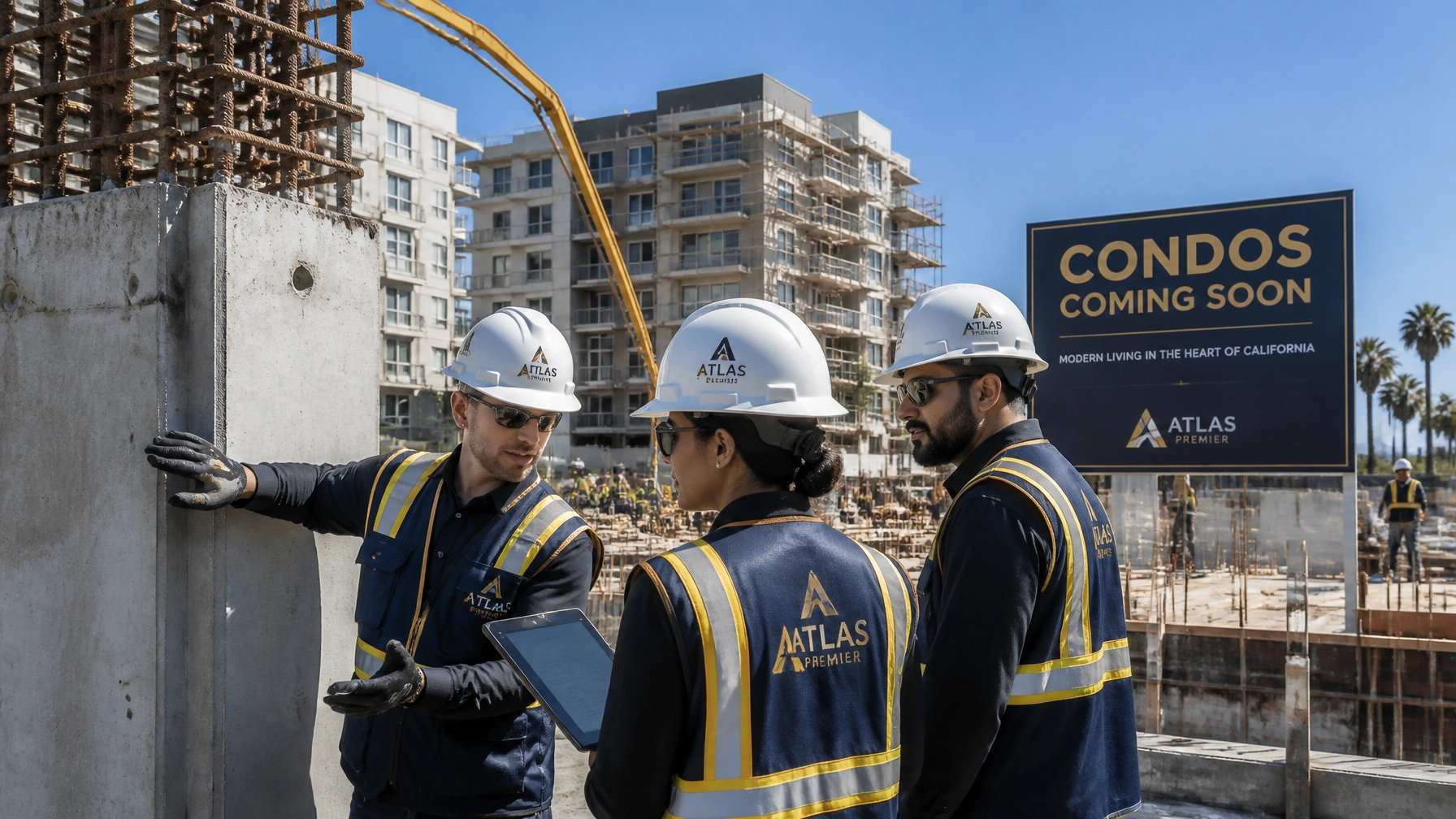
Navigating the shift from "Apartment Only" to for-sale housing under California’s new defect liability reform.
For over two decades, the math of building condominiums in California simply did not add up. The 2003 condo defect liability statute, better known as SB 800 or the "Fix-It" Act, was originally intended to give builders a fair chance to repair issues before being dragged into court. In reality, it turned the multifamily for-sale market into a legal minefield. Developers found themselves exposed to lawsuit risk for up to 10 years on every single unit sold, regardless of whether actual damage had occurred. This regulatory weight created a massive insurance gap. By the mid-2010s, insurance for a condo project regularly ran four times what a developer would pay for a comparable apartment building. For many, the choice was clear: build rentals or get out of the game entirely.
The result was a staggering 90 percent decline in condo construction statewide since 2005. Builders who stayed in the market often resorted to defensive strategies like leasing out luxury units as apartments for a decade just to wait out the liability window before finally selling them as condos. This "condo drought" effectively stripped the Bay Area and the rest of the state of its most critical entry-level housing. But with the passage of AB 1903, the tide is finally turning. This landmark legislation introduces a third-party certification pathway and a strengthened "Right to Repair" that makes construction risk calculable for the first time in a generation. California is finally catching up to sustainable housing models seen in neighboring states, and for property owners and developers, this shift represents the most significant change to the residential landscape in twenty years.
- The Technical Mechanics of AB 1903: How the new "Certified Building" pathway creates a legal safe harbor for developers through rigorous third-party oversight.
- The Real Cost of Liability: A breakdown of how insurance premiums and pro forma math change when switching from rental to for-sale under the new framework.
- Actionable Next Steps for Owners: What Bay Area developers and property managers need to do this year to prepare for the 2027 rollout of the new standards.
The Ghost of 2003 and the Decline of Multifamily Ownership
To understand why AB 1903 matters, you have to understand the wreckage left by SB 800. Before 2003, construction defect litigation was already a challenge, but the "Fix-It" Act codified a set of standards that effectively guaranteed a lawsuit for nearly every major project. Because the law allowed homeowners to sue for "technical violations" of building standards even if no water was leaking and no floors were sagging, it created a cottage industry for plaintiff attorneys. By the time a building reached its seventh or eighth year, an HOA-led lawsuit was almost a mathematical certainty.
This environment forced the insurance industry to hike rates to unsustainable levels. General liability "wrap" policies for condos began to include massive self-insured retentions, often ranging from $50,000 to $100,000 per claim. When you multiply that by the number of units in a typical Oakland or San Jose mid-rise, the risk became a project-killer. Most small to mid-sized developers were priced out of the market, leaving only the largest institutional players to build "for-sale" products, which is why almost every new condo built in the last decade has been a high-end luxury unit. The middle market, the starter home for the Bay Area professional, simply vanished.
Decoding the Certified Building Pathway
The core innovation of AB 1903 is the "Certified Building" designation. This is a voluntary track that allows a developer to opt into a higher level of scrutiny during the construction phase in exchange for a streamlined liability release. Unlike the old system, where a builder could do everything right and still get sued ten years later, the new pathway relies on "real-time compliance."
Under this framework, a developer hires a state-approved, third-party inspection firm. These aren't just city inspectors doing a quick walk-through. These are specialized engineering and forensic firms that document every concrete pour, every window flashing, and every roof penetration. This documentation is uploaded to a permanent digital ledger. If the building meets all "Gold Standard" benchmarks upon completion, it receives a certificate that severely limits the types of "non-damage" claims that can be filed later. It shifts the burden of proof back toward the claimant, requiring evidence of actual failure rather than just a deviation from a technical manual.
The Right to Repair Revolution
While the original 2003 act had a "Right to Repair" clause, it was famously toothless. Many HOAs found ways to bypass the repair process entirely or argued that the builder’s proposed fix was inadequate, heading straight to a jury trial. AB 1903 gives this process real teeth. It mandates a "Structured Offer" period where a builder’s offer to repair, if verified by the third-party inspector, can actually halt a lawsuit in its tracks.
For developers, this means that if a window leaks in year four, they have a protected legal window to fix it without it turning into a $2 million legal discovery process. For homeowners, it means faster results. Instead of waiting five years for a legal settlement to pay for repairs, the work gets done in months. This balance is what was missing from the California market for two decades. It treats construction as a craft that sometimes requires maintenance, rather than a permanent liability trap.
Insurance Markets and the New Pro Forma Math
The most immediate impact of AB 1903 will be seen in project financing. When insurance costs drop from 4% of hard costs down to 1% or 1.5%, the "pencil test" for a project changes overnight. We are already seeing insurers signal that they will offer significantly lower premiums for projects that opt into the third-party certification track.
In the Bay Area, where land and labor costs are already at record highs, saving $15,000 to $20,000 per unit in insurance and legal contingency costs is enough to turn a stalled project into a viable one. This is especially true for infill townhomes and smaller "missing middle" projects in places like Berkeley and Alameda. These smaller projects often couldn't absorb the massive "wrap" policy costs of the old regime. With AB 1903, the barrier to entry for local, boutique developers is finally lowering.
Comparison: California and the Colorado Model
California isn't acting in a vacuum. We are following a trail blazed by Colorado, which passed the "American Dream Act" (HB 25-1272) just last year. Colorado faced a nearly identical "condo drought" and saw its for-sale multifamily market rebound within twelve months of passing similar reform. The Colorado model proved that when you give builders a way to calculate and cap their risk, they will build for-sale housing again.
AB 1903 is actually a more robust version of the Colorado law. It includes stronger consumer protections and more rigorous inspection standards, which was the key to getting it through the Assembly with a 70-0 vote. It’s a rare moment of bipartisan agreement in Sacramento, driven by the sheer desperation of the state’s housing crisis. By aligning with a proven model, California is signaling to the national investment community that our "condo-phobia" is officially over.
Impact on Bay Area Urban Infill and Transit-Oriented Development
The Bay Area stands to gain more from this reform than perhaps any other region. Our transit-oriented development (TOD) goals depend on high-density, for-sale housing near BART and Caltrain stations. Up until now, almost all TOD has been rental-only. This creates a transient neighborhood feel rather than a community of invested owners.
With AB 1903, we expect to see a surge in "transit-adjacent" condos in Oakland’s Uptown, San Jose’s Diridon Station area, and the various BART corridors in the East Bay. This isn't just about building units. It’s about building equity for a generation of Bay Area residents who have been locked out of the market. From a construction management perspective, this means we need to prepare for a different type of project delivery, one that prioritizes the "certification ledger" from day one.
Balances and Protections for Homeowners
It is a common misconception that defect reform hurts the consumer. In fact, the old system often left homeowners in a lurch. Lawsuits would drag on for years, while the HOA’s legal fees ate up 40 percent of the eventual settlement. During the litigation, residents were often unable to sell or refinance their units because of the "litigation cloud" over the building.
AB 1903 protects homeowners by ensuring the building is built better in the first place. The third-party inspection requirement acts as a massive quality-control filter that didn't exist before. When issues do arise, the "Right to Repair" provisions ensure that fixes happen quickly. A repaired roof is worth far more to a homeowner than a legal settlement check that arrives four years late. This shift from "litigation-first" to "quality-first" is the real win for the California consumer.
The 2003 to 2027 Liability Evolution
| Milestone | Year | Significance |
|---|---|---|
| SB 800 Takes Effect | 2003 | The "Fix-It" Act establishes the 10-year liability tail and technical violation standards. |
| Condo Peak | 2005 | The final year of high-volume condo permits before the liability impact fully registers. |
| Apartment Pivot | 2012 | Post-recession recovery focuses almost exclusively on rentals due to lower risk. |
| McMillin Albany Decision | 2018 | CA Supreme Court confirms SB 800 as the "virtually exclusive" path for defect claims. |
| Insurance Crisis | 2021 | Condo wrap policies hit 4x the cost of apartment insurance. |
| Colorado Reform | 2025 | Colorado passes HB 25-1272, creating a successful blueprint for liability reform. |
| AB 1903 Passage | 2026 | California Assembly passes the condo reform bill 70-0. |
| Newsom Signing | 2026 | The Governor signs AB 1903, signaling a new era for for-sale housing. |
| Implementation | 2027 | The "Certified Building" pathway and third-party ledgers become active for new starts. |
Comparative Framework: Liability Standards
| Feature | Old Framework (SB 800) | New AB 1903 Framework |
|---|---|---|
| Liability Trigger | Technical violation (even without damage) | Verified failure or actual property damage |
| Liability Window | 10-year statute of repose | 10-year repose, but "Certification" limits scope |
| Inspection Process | City-only or builder internal | Mandatory third-party "Certified" inspection |
| Right to Repair | Procedural, often bypassed | Substantive, with verified repair protections |
| Insurance Cost | 3-4% of hard construction costs | 1-1.5% estimated for "Certified" buildings |
| HOA Litigation | Board-driven, high frequency | Owner-approval thresholds and repair-first mandates |
Case Example: The 10-Year Lease Gamble
A prominent developer in the Potrero Hill neighborhood of San Francisco recently completed a 40-unit residential project. On paper, the project was designed as a luxury condominium. However, after reviewing the 2024 insurance quotes and the "litigation history" of neighboring buildings, the developer made a radical pivot. They decided to hold the building as a rental property for exactly ten years.
The plan was a "defensive lease-up." By renting the units, the developer ensured that they would not trigger the 10-year condo defect clock until the "Statute of Repose" had significantly decayed. This "10-Year Gamble" required a different type of financing and a lower initial return on investment. The developer effectively traded a quick sales profit for a long-term risk mitigation strategy. Under AB 1903, this developer wouldn't have to wait. They could have certified the project during construction, secured affordable insurance, and sold the units immediately, putting 40 homeowners into the San Francisco market a decade sooner.
What Smart Critics Argue
Consumer advocacy groups and specialized plaintiff attorneys have expressed concerns that AB 1903 may "dilute" the accountability of builders. They argue that third-party inspectors, while technically independent, are still paid by the developer, which could lead to a "fox guarding the henhouse" scenario. There is also a worry that homeowners might find it harder to get full compensation for complex, latent structural issues that don't manifest as "actual damage" until after the 10-year window has closed.
However, the evidence-based response is that the current system is already failing both builders and consumers. The status quo has led to a lack of housing, which is its own form of consumer harm. AB 1903’s inclusion of state-certified inspectors and the requirement for a digital ledger of all photos and reports provides a level of transparency that simply didn't exist under SB 800. Accountability isn't being removed. It’s being moved to the point of construction where it can actually prevent the defects from happening in the first place.
Key Takeaways for Bay Area Stakeholders
- The "Condo Drought" is Ending: AB 1903 is the most significant legislative move toward for-sale housing in twenty years.
- Certification is the New Standard: Developers who want lower insurance rates must adopt the "Certified Building" pathway.
- Third-Party Oversight is Mandatory: Quality control moves from an internal checklist to a documented, third-party legal ledger.
- Insurance Pro Formas Must Be Updated: Expect a 50-60% drop in liability premiums for certified projects.
- Right to Repair Has Teeth: Builders now have a legally protected window to fix issues before they turn into lawsuits.
- The Colorado Model Works: This reform is based on proven results that increased condo supply in other states.
- Timing Matters: The 2027 rollout means projects in the design phase now should be planned for certification.
- TOD is the Primary Target: Transit-oriented developments are perfectly positioned for the "for-sale" pivot.
6 Reader Actions
- At Work: Review your current multifamily pipeline. Identify projects that were planned as rentals but could "pencil" better as condos under AB 1903.
- At Home: If you are in the market for a home, research "Certified Buildings" starting in 2027. These projects will have higher documented quality than older stock.
- In the Community: Advocate for local zoning that supports townhomes and mid-rise condos now that the liability barrier is lowering.
- In Civic Life: Contact your local Planning Department to ensure they are aware of the "Certified Building" track and ready to support third-party inspectors.
- The "Extra Step": Reach out to your insurance broker for a "shadow quote" on a potential condo project using the AB 1903 framework to see the real-world savings.
- For Professionals: If you are a contractor or architect, start building relationships with state-approved third-party inspection firms now.
FAQ
Does AB 1903 apply to existing condos?
No. The new framework applies only to new projects that opt into the "Certified Building" pathway after the 2027 implementation date. Existing buildings are still governed by the SB 800 standards in place at the time of their construction.
What is the "Certified Building" ledger?
It is a permanent, digital record of all third-party inspections, photos, and compliance reports generated during construction. This ledger stays with the building and provides a "chain of quality" for future buyers and insurers.
Will this make condos cheaper to buy?
While market demand ultimately sets prices, reducing insurance and legal costs by $20,000 per unit allows developers to bring projects to market that would have otherwise been financially impossible, which increases supply.
Can I still sue a builder for a major structural failure?
Yes. AB 1903 does not remove the right to sue for actual property damage or life-safety failures. It primarily limits the "technical" or "non-damage" claims that previously drove up insurance costs.
Who pays for the third-party inspector?
The developer pays for the inspector, similar to how they pay for private structural engineers or soils experts. However, the inspector must be state-certified and independent to maintain the project’s "Certified Building" status.
Ready to move your project from concept to completion?
Contact Atlas Premier Services and Consultants today.
Atlas Premier Services and Consultants
Strategic Solutions. Trusted Execution.
Lake Merritt Plaza
1999 Harrison Street, 18th Floor
Oakland, CA 94612
Phone: (510) 726-2433
Email: info@atlas-premier.com
Sources
- California State Assembly, "AB 1903: Construction Defect Liability Reform," Official Bill Text, June 2026.
- Terner Center for Housing Innovation, "The Financial Impacts of Construction Defect Liability on Housing Development in California," UC Berkeley Research, 2024.
- California Department of Insurance, "Multifamily Housing Insurance Market Report," 2025.
- Colorado General Assembly, "HB 25-1272: The American Dream Act," Official Summary, 2025.
- Bay Area Council, "Restoring the Condo Market: Policy Recommendations for the Bay Area," 2026.
- Berding & Weil, "Understanding SB 800 and the McMillin Albany Decision," Industry Analysis, 2018.
- SPUR, "Solving the Condo Drought: New Pathways for Urban Ownership," 2025.
- Atlas Premier Services and Consultants, "Townhouse Pivot: Trumark Homes Proposes 66 Units," Internal Case Study, 2026.
Disclaimer: This content is for general informational purposes only and does not constitute legal, financial, engineering, construction, regulatory, or other professional advice. Reading this content does not create a client or contractual relationship with Atlas Premier Services & Consultants. Because every project and property is different, consult qualified professionals regarding your specific circumstances. Atlas Premier Services & Consultants makes no warranties regarding the accuracy or completeness of this information and is not responsible for third-party content or references. Testimonials, examples, and case studies are illustrative only and do not guarantee similar results.