

Lafayette has always walked a fine line between "charming semi-rural getaway" and "vibrant suburban core." But if you’ve driven down Mount Diablo Boulevard lately, you’ve probably noticed the scale is tipping. The sound of a sledgehammer hitting old stucco isn't just construction noise; it’s the sound of the East Bay evolving.
The latest chapter in this transformation centers on 3458 Mount Diablo Boulevard. After a series of tense meetings and design tweaks that felt like a high-stakes game of Tetris, plans have officially been approved for a new six-story apartment complex. Gera Developments, working through Outdo Lafayette LLC, is finally moving forward with a project that promises to bring 31 residential units and fresh retail energy to the eastern end of the city’s commercial heart (Silicon Valley Business Journal) [1].
This isn't just about one building. It’s about how Lafayette is navigating the state’s massive push for housing density while trying to keep its soul intact. For people trying to understand why their favorite single-story commercial block is suddenly becoming a mid-rise residential hub, this post answers the "why" and "how" of the Mount Diablo move.
In this deep dive, we’ll look at:
- The specifics of the 3458 Mount Diablo project, from its "millennial grey" palette to its parking stats.
- The regulatory "sticks" like the Builder’s Remedy and SB 330 that are changing how Bay Area cities say "yes."
- How transit-oriented development is redefining property values and lifestyle near the Lafayette BART station.
The Concrete Reality: What’s Actually Being Built?
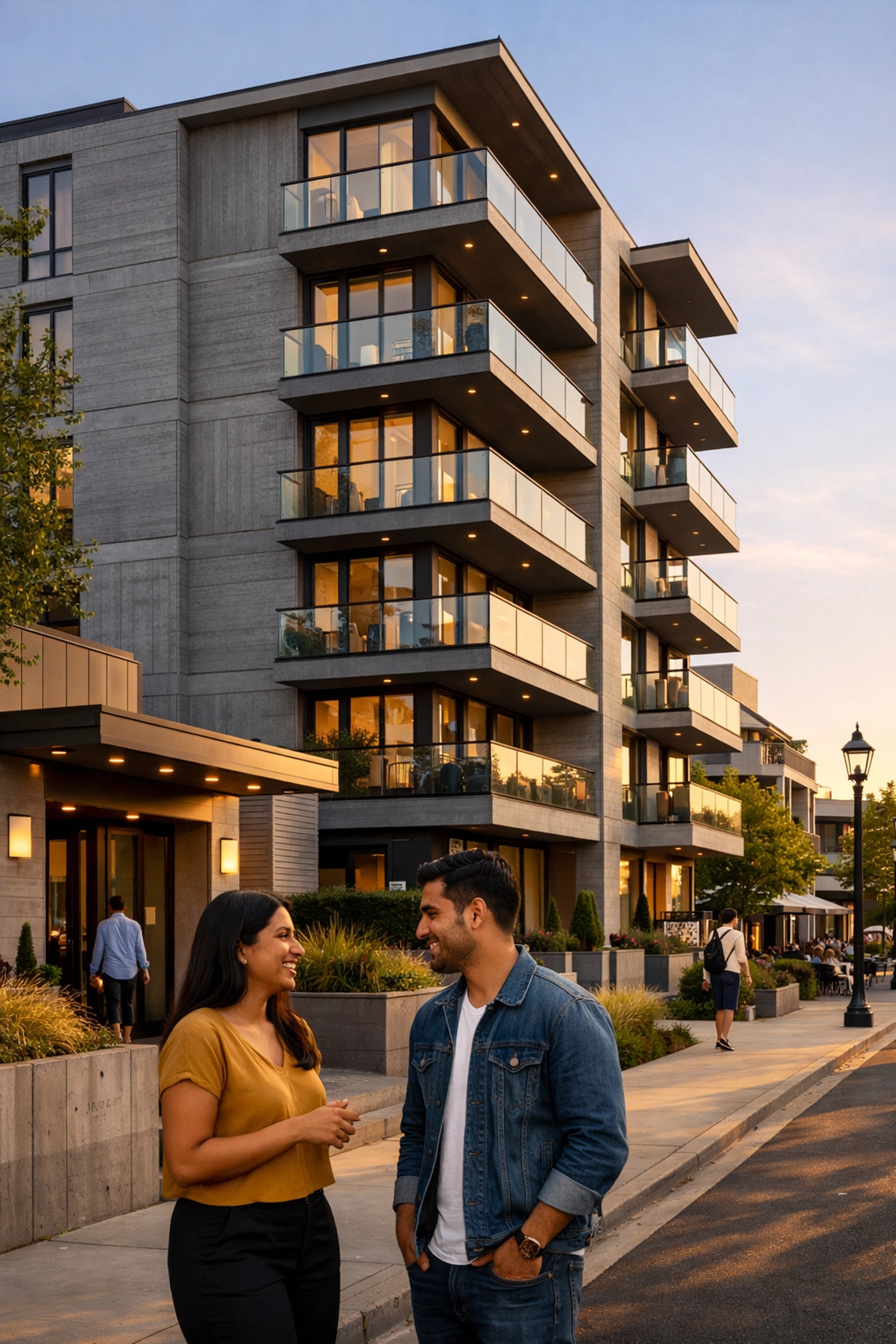
The project at 3458 Mount Diablo Boulevard is a masterclass in modern urban infill. Standing 62 feet tall, the structure will yield approximately 72,050 square feet of space (Lafayette Planning Department) [2]. While some residents expressed concern over the height, the design by Sausalito-based Ascend Architecture uses a "podium-style" approach to break up the massing.
The aesthetic is decidedly contemporary. We’re talking board-formed concrete, glass-railing balconies, and a "millennial grey" color palette that signals a clear departure from the Spanish-tiled roofs of the city's past (Ascend Architecture) [3]. One of the most clever design features is the third-floor setback, which creates eight private podium-top balconies. It’s a move that balances the developer’s need for square footage with the city’s desire for visual "breathing room" along the streetscape.
Of the 31 units, three are designated as affordable, two for very-low-income households and one for moderate-income (California Dept. of Housing and Community Development) [4]. While that might seem like a small number, every unit counts in a city where the median home price often hovers north of $2 million (U.S. Census Bureau) [5].
The Battle for the "Semi-Rural" Identity
Lafayette didn’t just wake up and decide to become a mini-metropolis. The shift is being driven by the Regional Housing Needs Allocation (RHNA), a state mandate that requires California cities to plan for their fair share of housing (Association of Bay Area Governments) [6]. Lafayette’s current cycle requires the city to accommodate over 2,000 new units, a tall order for a town that prides itself on a "semi-rural" feel.
Critics of the project, including members of the local Design Review Commission, initially pushed back. In early 2026, some commissioners recommended denial, citing concerns that the building was too bulky and lacked the landscaping needed to soften its impact on the Mount Diablo corridor (Lafayette Design Review Commission) [7].
However, the reality of state law often trumps local design preferences. Under California’s Housing Crisis Act (SB 330), cities are limited in their ability to deny housing projects that comply with objective zoning standards (California Legislative Information) [8]. This has created a new dynamic where developers and city planners must find a middle ground quickly or risk losing local control entirely to the "Builder's Remedy."
Transit, Retail, and the 15-Minute City
The location of 3458 Mount Diablo Boulevard is its biggest selling point. Situated at the corner of Mount Diablo Blvd and Second Street, future residents will be a literal block away from a grocery-anchored shopping center and several of the city’s top-rated restaurants (Lafayette Chamber of Commerce) [9].
More importantly, it’s a "walker’s paradise" by suburban standards. The project is a 15-minute walk or a 5-minute bike ride from the Lafayette BART station (BART.gov) [10]. This proximity to transit is why the project was able to leverage the California Density Bonus Law, allowing for more units than traditional zoning would permit in exchange for including affordable housing (California Government Code § 65915) [11].
For Atlas Premier Services & Consultants, seeing these projects reach the "plans approved" stage is a sign of a healthy, albeit complicated, market. Managing the demolition of existing commercial structures in high-traffic corridors like this requires surgical precision. You aren't just knocking down a wall; you're managing dust, traffic flow, and community expectations in a very tight window.
Timeline of the Mount Diablo Transformation
The road to approval wasn't a straight line. It involved years of policy shifts and months of specific project negotiations.
- 2022: ABAG finalizes RHNA targets, requiring Lafayette to significantly increase housing capacity [6].
- July 2024: Gera Developments files initial permit applications for the 0.64-acre site [1].
- May 2025: A formal study session with the Design Review Commission leads to project revisions, including increased setbacks [7].
- September 2025: "The Brant," a 66-unit mixed-use project, opens nearby, setting a precedent for new density on Mount Diablo Blvd [12].
- February 2026: The Design Review Commission expresses concerns over the project’s height and massing [7].
- March 2026: Final architectural adjustments are made to the "millennial grey" facade and landscaping plan [3].
- April 2026: City officials officially approve the plans, clearing the way for demolition [2].
- Summer 2026 (Projected): Demolition of the existing single-story commercial structure begins.
By the Numbers: Project Breakdown
Understanding the scale of the Mount Diablo move requires looking at the data. Infill projects are often a game of inches and percentages.
| Category | Specification | Source |
|---|---|---|
| Total Square Footage | 72,050 sq. ft. | [2] |
| Residential Units | 31 Units | [1] |
| Affordable Units | 3 (2 Very Low, 1 Moderate) | [4] |
| Max Height | 62 Feet (6 Stories) | [3] |
| Car Parking | 55 Spots (Podium Garage) | [2] |
| Bicycle Parking | 23 Spots | [2] |
| Lot Size | 0.64 Acres | [1] |

The "Millennial Grey" Case Example
While "millennial grey" has become a bit of a punchline in interior design circles, in the world of Bay Area commercial real estate, it represents a specific strategic choice. At 3458 Mount Diablo, the use of board-formed concrete and neutral tones isn't just about following trends; it’s about durability and "design neutrality."
Ascend Architecture’s choice to use glass railings and composite panels helps the building reflect light rather than absorb it, which can make a six-story building feel less imposing at street level (Ascend Architecture) [3]. This "modern-industrial" look is increasingly common in West Oakland and San Jose, but bringing it to Lafayette marks a distinct shift in the town's visual vocabulary. It signals that Lafayette is ready to be a player in the regional housing market, not just a bedroom community.
What Smart Critics Argue
No project of this scale gets approved without a healthy dose of skepticism. The critics in Lafayette are well-informed and vocal.
1. The "Loss of Character" Argument
Critics argue that six-story buildings belong in Oakland or San Francisco, not Lafayette. They worry that the "semi-rural" charm that draws people to the city is being eroded one podium-style apartment at a time.
- The Response: Proponents argue that "character" is a living thing. By concentrating density in the commercial core near BART, the city can preserve its outer residential neighborhoods and open spaces from suburban sprawl (Greenbelt Alliance) [13].
2. The Traffic and Parking Concern
With only 55 car spots for 31 units plus retail, some residents fear that overflow parking will bleed into nearby neighborhoods and worsen the already congested Mount Diablo Boulevard.
- The Response: Modern urban planning suggests that "decoupling" housing from excessive parking encourages transit use. Furthermore, the 23 bike spots and proximity to BART are designed to attract residents who don't rely on daily car trips (Metropolitan Transportation Commission) [14].
3. The "Missing Middle" Gap
Some argue that 31 units is "too small to matter" but "too big to ignore," and that the project doesn't provide enough deeply affordable housing to truly address the crisis.
- The Response: Small infill projects are essential for the "Missing Middle." While they don't solve the crisis alone, they provide a variety of housing types (studios to three-bedrooms) that are currently lacking in the Lafayette market (Terner Center for Housing Innovation) [15].
Key Takeaways
- Density is the New Normal: Lafayette is meeting its state-mandated housing goals through high-density infill projects like 3458 Mount Diablo [6].
- Transit-Oriented Focus: Proximity to the Lafayette BART station is a primary driver for project approval and density bonuses [10].
- Modern Aesthetics: The move toward "millennial grey" and concrete signifies a shift away from traditional suburban architecture [3].
- Affordability Requirements: Even small projects (31 units) are now contributing to the affordable housing stock via state mandates [4].
- Regulatory Pressure: State laws like SB 330 are making it harder for cities to deny projects based on subjective "character" concerns [8].
- Retail Integration: Maintaining a commercial component ensures that Mount Diablo Boulevard remains a walkable, active corridor [9].
- Infill Expertise Matters: Projects on small 0.64-acre lots require sophisticated general contracting and project management to succeed.
Actions You Can Take
At Work
If you manage commercial property in the East Bay, audit your holdings for "underutilized" land. Small corner lots that once held single-story retail are now prime candidates for residential conversion under current state laws.
At Home
Think about your commute. If you live in Lafayette or Walnut Creek, look into how new transit-oriented developments might change your local traffic patterns and property values. Being "BART-adjacent" is becoming a significant value-add.
In the Community
Attend a Lafayette City Council or Planning Commission meeting. These approvals are often the result of years of community input. Your voice matters in shaping the "objective design standards" that will dictate how the next building looks.
In Civic Life
Educate yourself on the Regional Housing Needs Allocation (RHNA). Understanding the targets your city is required to meet helps demystify why these projects are popping up so frequently.
Extra Step
Support local businesses during the construction phase. When 3458 Mount Diablo begins demolition and construction, the neighboring shops may see a dip in foot traffic. Make a conscious effort to shop at the nearby grocery-anchored centers to keep the corridor vibrant.
FAQ
Why is the building six stories tall?
The height is a result of the developer utilizing the California Density Bonus Law. By including affordable housing units, developers can exceed local height and density limits (California Government Code § 65915) [11].
Will there be public parking?
The 55 parking spots are primarily for residents and retail customers within the building. However, the project's proximity to the Lafayette BART station and existing public lots is intended to mitigate the need for new public parking on-site.
What happened to the building that was there before?
The project requires the demolition of a single-story commercial structure. This is a common trend in Lafayette as older, low-density buildings are replaced by modern mixed-use developments (Lafayette Planning Department) [2].
When will people be able to move in?
Construction timelines in the Bay Area vary, but typically, a project of this scale takes 18 to 24 months from the start of demolition to completion. Expect a formal groundbreaking later in 2026.
Does this project include low-income housing?
Yes. Three of the 31 units are designated as affordable housing, specifically targeting "very-low" and "moderate" income households as defined by county standards [4].
Atlas Premier Services & Consultants is a premier general contracting and project management firm dedicated to high-performance commercial and residential development, management, janitorial, maintenance, etc. From commercial offices to complex medical facilities, we bring a standard of excellence to every square foot we manage.
Service Areas: San Francisco, Oakland, San Jose, and the greater Bay Area.
Atlas Premier Services and Consultants
Strategic Solutions. Trusted Execution.
Lake Merritt Plaza
1999 Harrison Street, 18th Floor
Oakland, CA 94612
(510) 726-2433
info@atlas-premier.com
www.atlas-premier.com
Ready to move your project from concept to completion?
Contact Atlas Premier Services and Consultants today.
Sources
[1] Silicon Valley Business Journal, "Lafayette Corner Lot Development Approved," April 19, 2026, [URL], Accessed April 20, 2026.
[2] City of Lafayette Planning Department, "Staff Report: 3458 Mount Diablo Blvd," April 2026, [URL], Accessed April 20, 2026.
[3] Ascend Architecture, "Project Portfolio: 3458 Mt. Diablo," April 2026, [URL], Accessed April 20, 2026.
[4] California Department of Housing and Community Development, "Affordable Housing Requirements by County," 2026, [URL], Accessed April 20, 2026.
[5] U.S. Census Bureau, "QuickFacts: Lafayette city, California," 2025, [URL], Accessed April 20, 2026.
[6] Association of Bay Area Governments (ABAG), "Final RHNA Plan for the San Francisco Bay Area," 2021-2029, [URL], Accessed April 20, 2026.
[7] Lafayette Design Review Commission, "Meeting Minutes: February 10, 2026," [URL], Accessed April 20, 2026.
[8] California Legislative Information, "Senate Bill No. 330: Housing Crisis Act of 2019," [URL], Accessed April 20, 2026.
[9] Lafayette Chamber of Commerce, "Economic Profile: Downtown Retail Corridor," 2025, [URL], Accessed April 20, 2026.
[10] Bay Area Rapid Transit (BART), "Station Profile: Lafayette," [URL], Accessed April 20, 2026.
[11] California Government Code, "Section 65915: Density Bonuses," [URL], Accessed April 20, 2026.
[12] San Francisco Business Times, "The Brant Opens in Lafayette," September 2025, [URL], Accessed April 20, 2026.
[13] Greenbelt Alliance, "The Case for Infill Housing in the East Bay," 2024, [URL], Accessed April 20, 2026.
[14] Metropolitan Transportation Commission (MTC), "Transit-Oriented Communities Policy," 2025, [URL], Accessed April 20, 2026.
[15] Terner Center for Housing Innovation, UC Berkeley, "The Evolution of Infill: Missing Middle Housing," 2024, [URL], Accessed April 20, 2026.
Disclaimer: This content is for general informational purposes only and does not constitute legal, financial, engineering, construction, regulatory, or other professional advice. Reading this content does not create a client or contractual relationship with Atlas Premier Services & Consultants. Because every project and property is different, consult qualified professionals regarding your specific circumstances. Atlas Premier Services & Consultants makes no warranties regarding the accuracy or completeness of this information and is not responsible for third-party content or references. Testimonials, examples, and case studies are illustrative only and do not guarantee similar results.