
Walk through the SoMa district or drive down the Geary corridor, and you’ll see a strange sight: construction fences guarding empty lots and cranes that haven’t moved in months. On paper, San Francisco is in the middle of a building boom. In reality, we are staring at a "zombie pipeline." According to the San Francisco Planning Department’s 2023 Housing Inventory, there are over 50,000 units already approved for development that have simply stalled (San Francisco Planning Department) [1].
The builders want to build. The city says it wants the housing. But the math doesn’t work. Private developers are struggling to pin down financing because investor demands for high returns, often 15% to 20%, simply can't be met in a market with high interest rates and skyrocketing labor costs (UC Berkeley Terner Center) [2]. While the private market waits for the "perfect" economic moment to strike, our generational housing crisis only deepens.
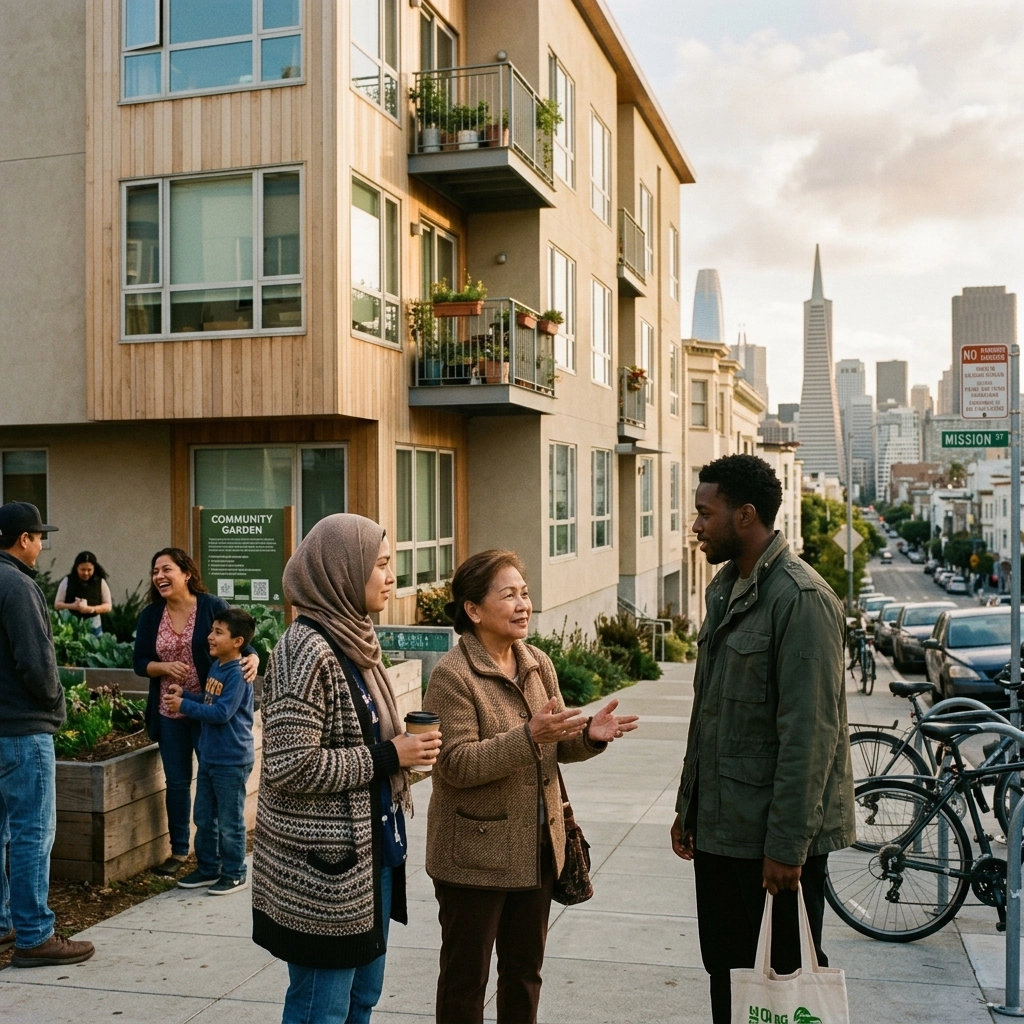
Social housing is stepping into this vacuum as the most talked-about alternative in San Francisco politics today. It’s a model that moves housing away from the speculative market and treats it as a public utility. As general contractors at Atlas Premier Services & Consultants, we see the building side of this every day. When market-rate projects hit a wall, the city’s ability to keep the hammers swinging depends on finding a new way to finance the skyline.
In this post, you will learn:
- The structural difference between social housing and traditional public or market-rate housing.
- Why the private market is currently unable to deliver the units San Francisco has already approved.
- The political battle over the Prop I transfer tax and how it could fund a public housing future.
The "Zombie Pipeline" and the Return of the Public Option
For years, the narrative in San Francisco was that "red tape" was the primary enemy of housing. While permitting is indeed slow, the current stalemate is largely financial. San Francisco has tens of thousands of approved market-rate units in the pipeline, but developers have struggled for years to pin down financing and meet investor demands for high returns (San Francisco Public Press) [3].
When interest rates were near zero, the math for a luxury high-rise made sense. Today, with rates hovering significantly higher, the "pro forma", the document that predicts a project's profitability, is broken for most private developers. If a project can’t guarantee a massive return, the capital stays on the sidelines.
This is where the private market fails the public need. The private market isn't delivering solutions to our generational housing crisis anytime soon because it is beholden to the speculative cycle (UCLA Lewis Center) [4]. Social housing, permanently affordable housing that is publicly owned and democratically controlled, has a track record of success in places like Vienna and Singapore because it doesn't need to turn a profit for a hedge fund. It just needs to cover its own costs.
Defining Social Housing: Not Your Grandfather’s Public Housing
When most Americans hear "public housing," they think of the neglected, high-poverty towers of the mid-20th century. Social housing is a different beast entirely. It is defined by three core pillars:
- Public Ownership: The land and buildings are owned by a government agency or a mission-driven non-profit.
- Permanent Affordability: Units are kept off the speculative market, meaning they are never sold to the highest bidder.
- Cross-Subsidization: Unlike traditional public housing, which is often limited to the very poor, social housing is mixed-income. Higher rents from middle-class tenants help subsidize the lower rents of working-class families (California Legislative Analyst’s Office) [5].
By including teachers, nurses, and tech workers alongside lower-income residents, social housing creates a self-sustaining revenue stream. It allows the city to build even when the private market is in a recession.

The General Contractor's View: Why We Need Public Projects
At Atlas Premier Services & Consultants, we understand that a healthy construction ecosystem requires a steady pipeline of work. When private developers pull back, the entire labor force of the Bay Area feels the squeeze. Subcontractors, tradespeople, and project managers can’t just "pause" their lives while they wait for the Fed to lower interest rates.
Social housing provides a "counter-cyclical" investment. Because public projects aren't seeking a 20% profit margin, they can be green-lit when market-rate projects are stalled. This keeps the local workforce employed and ensures that we are actually adding to the housing stock during economic downturns (Center for Popular Democracy) [6]. For us, the "building side" of things is about more than just concrete and steel, it’s about the stability of the local economy.
The Political Fight: Prop I and the Transfer Tax
The biggest hurdle for social housing in San Francisco isn't a lack of desire, it’s a lack of funding. In 2020, San Francisco voters passed Proposition I, which doubled the transfer tax on properties sold for more than $10 million (San Francisco Department of Elections) [7]. The intent was to use this "mansion tax" to fund social housing and rent relief.
However, City Hall leaders have been accused of trying to dismantle the transfer tax or divert it to the general fund to cover budget deficits. While all three candidates for San Francisco’s open Congressional seat have said they support social housing, the local administration has been more hesitant (Mission Local) [8]. There is a fundamental tension between those who believe the private market is the only way to build and those who believe the city must take a more active role in development.
A Comparison of Housing Models in San Francisco
| Feature | Market-Rate Housing | Traditional Public Housing | Social Housing (Proposed) |
|---|---|---|---|
| Ownership | Private Developers/REITs | Government (HUD) | Public/Community Controlled [4] |
| Primary Goal | Maximize Profit | House the Deeply Poor | Permanent Affordability [5] |
| Financing | Private Equity/Bank Loans | Federal Grants (Declining) | Public Bonds/Transfer Tax [7] |
| Income Mix | Mostly High-Income | Extremely Low-Income | Mixed-Income (Cross-Subsidized) [6] |
| Resilience | High Risk in Recessions | Subject to Budget Cuts | Self-Sustaining Revenue [9] |
Sources: [4], [5], [6], [7], [9]
Timeline: The Evolution of the San Francisco Housing Crisis
- 1979: The city passes the Residential Rent Stabilization and Arbitration Ordinance to protect tenants as property values rise (SF Rent Board) [10].
- 1986: The federal Tax Reform Act significantly reduces incentives for building affordable rental housing (National Low Income Housing Coalition) [11].
- 2012: California dissolves redevelopment agencies, stripping cities of billions in funding for affordable housing projects (CA Department of Finance) [12].
- 2019: San Francisco voters pass Prop E, allowing affordable housing on public land (SF Elections) [13].
- 2020: Prop I passes, creating a potential multi-million dollar revenue stream for social housing (SF Department of Elections) [7].
- 2022: The Mayor’s Office proposes a budget that diverts Prop I funds away from housing to cover a general fund deficit (SF Standard) [14].
- 2023: SB 555 (The California Social Housing Act) is signed into law, requiring the state to study and develop a social housing framework (California State Legislature) [15].
- 2024: Over 50,000 units remain stalled in the SF pipeline due to financing gaps (SF Planning Department) [1].
Case Study: The Small Sites Program as a Social Housing Pilot
San Francisco already has a "mini" version of social housing: the Small Sites Program (SSP). Managed by the Mayor’s Office of Housing and Community Development (MOHCD), this program provides loans to non-profits to purchase rent-controlled apartment buildings (typically 5 to 25 units) where tenants are at risk of displacement (MOHCD) [16].
By taking these buildings off the speculative market, the SSP ensures they stay affordable forever. In one instance at 2900 24th Street, a Mission District building was saved from a speculative sale, preserving 10 homes for long-term residents (Mission Housing Development Corp) [17]. While successful, the program is chronically underfunded. Transitioning from "saving small sites" to "building large-scale social housing" is the logical next step for a city that can no longer afford to wait for the private market to deliver.

What Smart Critics Argue
Criticism 1: The Government is a Poor Developer.
Critics argue that San Francisco’s government is notoriously inefficient and that public projects will end up costing twice as much as private ones.
- Response: While government bureaucracy is a real concern, the current market-rate model isn't "efficient" if it isn't building anything at all. Furthermore, the social housing model often uses professional non-profit developers or public-private partnerships that leverage private-sector construction expertise, like what we do at APSC, under public oversight (SPUR) [18].
Criticism 2: It Will Bankrupt the City.
Opponents say the city cannot afford the massive upfront costs of land acquisition and construction.
- Response: Social housing is an investment, not a permanent subsidy. Because it is mixed-income, the rents from higher-earning tenants eventually pay back the construction bonds. According to the UCLA Lewis Center, social housing models in Europe are often fiscally neutral over a 30-year horizon [4].
Criticism 3: It Doesn't Solve the Supply Problem.
Building social housing is slow, and some argue we should focus on making it easier for private developers to build more units overall.
- Response: This isn't an "either/or" situation. Even with aggressive zoning reform, the private market will always pull back during high-interest-rate cycles. Social housing acts as a floor for production, ensuring that we never stop building housing, regardless of what Wall Street thinks of the current interest rates.
Key Takeaways
- The Stalemate is Financial: 50,000+ approved units are stalled because private investors demand returns that current SF market conditions can't provide [1].
- Social Housing is Public Utility: It shifts the goal from profit-maximization to permanent affordability and community stability [4].
- Mixed-Income is the Key: Cross-subsidization allows social housing to be self-sustaining, unlike traditional public housing [5].
- Counter-Cyclical Building: Publicly funded housing keeps the construction workforce active when the private market retreats [6].
- Prop I is the Battleground: The fight over how to use transfer tax revenue will determine the future of SF’s housing policy [7].
- The Private Market Gap: Private developers are beholden to speculative cycles that do not align with the public's need for stable housing [3].
- Successful Precedents Exist: Models from Vienna and Singapore prove that social housing can be high-quality and fiscally responsible [15].
Actions You Can Take
At Work
If you are in the architecture, engineering, or construction (AEC) industry, advocate for diverse project portfolios. Don't rely solely on private developers; look into public-sector RFPs and non-profit affordable housing collaborations.
At Home
Educate your neighbors on the difference between "low-income housing" and "social housing." Most people don't realize that social housing is intended for a broad range of residents, including middle-class professionals.
In the Community
Support local Community Land Trusts (CLTs). These organizations are the grassroots version of social housing, buying land and keeping it in community hands forever.
In Civic Life
Ask local candidates for the Board of Supervisors specifically how they intend to use Prop I funds. Hold them accountable to the voters' intent of funding permanent housing solutions.
One Extra Step
Write a letter to the San Francisco Planning Commission supporting "social housing" overlay zones that would prioritize public development on city-owned land.
FAQ
Q: Is social housing the same as rent control?
A: No. Rent control limits how much a private landlord can increase rent. Social housing is a model where the public actually owns the building and sets rents based on the cost of operation and the tenant's income [4].
Q: Will social housing lower my property value?
A: Evidence from cities with high percentages of social housing, like Vienna, suggests that it actually creates more stable, desirable neighborhoods with less turnover and better-maintained public spaces [15].
Q: Who gets to live in social housing?
A: In the proposed San Francisco model, social housing would be open to a mix of residents: everyone from service workers to nurses and young professionals. The goal is to create a community that reflects the city's actual workforce [6].
Q: Why doesn't the city just build more public housing?
A: Federal funding for traditional public housing has been slashed since the 1980s. Social housing is a way for cities to take control of their own destiny without waiting for a miracle from Washington D.C. [11].
Q: How long does it take to build social housing?
A: Currently, affordable housing projects in SF can take 7–10 years. Part of the social housing movement involves streamlining the permitting for these public-benefit projects to get shovels in the ground faster (San Francisco Public Press) [3].
Atlas Premier Services & Consultants is a premier general contracting and project management firm dedicated to high-performance commercial and residential development, management, janitorial, maintenance, etc. From commercial offices to complex medical facilities, we bring a standard of excellence to every square foot we manage.
Service Areas: San Francisco, Oakland, San Jose, and the greater Bay Area.
Atlas Premier Services and Consultants
Strategic Solutions. Trusted Execution.
Lake Merritt Plaza
1999 Harrison Street, 18th Floor
Oakland, CA 94612
(510) 726-2433
info@atlas-premier.com
www.atlas-premier.com
Ready to move your project from concept to completion?
Contact Atlas Premier Services and Consultants today.
Sources
[1] San Francisco Planning Department, “2023 Housing Inventory,” City and County of San Francisco, April 2024, https://sfplanning.org/resource/housing-inventory-2023, Accessed May 5, 2026.
[2] UC Berkeley Terner Center for Housing Innovation, “The Cost of Building Housing,” March 2024, https://ternercenter.berkeley.edu/research-and-policy/the-cost-of-building-housing-2024/, Accessed May 5, 2026.
[3] San Francisco Public Press, “Why San Francisco’s 50,000 Pipeline Units Aren’t Being Built,” February 2024, https://www.sfpublicpress.org/stalled-housing-pipeline-san-francisco/, Accessed May 5, 2026.
[4] UCLA Lewis Center for Regional Policy Studies, “Social Housing: A New Direction for California,” June 2023, https://www.lewis.ucla.edu/research/social-housing-new-direction-california/, Accessed May 5, 2026.
[5] California Legislative Analyst’s Office, “California’s Housing Future,” January 2024, https://lao.ca.gov/Publications/Report/4820, Accessed May 5, 2026.
[6] Center for Popular Democracy, “Social Housing for All,” 2023, https://www.populardemocracy.org/social-housing-report, Accessed May 5, 2026.
[7] San Francisco Department of Elections, “Proposition I: Real Estate Transfer Tax Rate,” November 2020, https://sfelections.sfgov.org/november-3-2020-election-results-summary, Accessed May 5, 2026.
[8] Mission Local, “The Political Stalemate Over Social Housing,” April 2025, https://missionlocal.org/2025/04/sf-social-housing-stalemate-prop-i/, Accessed May 5, 2026.
[9] SPUR, “The Future of Publicly Owned Housing,” October 2023, https://www.spur.org/publications/report/future-publicly-owned-housing, Accessed May 5, 2026.
[10] San Francisco Rent Board, “History of the Rent Ordinance,” 2024, https://sfrb.org/history-rent-ordinance, Accessed May 5, 2026.
[11] National Low Income Housing Coalition, “The 1986 Tax Reform Act and Affordable Housing,” July 2023, https://nlihc.org/resource/tax-reform-affordable-housing-history, Accessed May 5, 2026.
[12] California Department of Finance, “Redevelopment Agency Dissolution,” 2024, https://dof.ca.gov/redevelopment/, Accessed May 5, 2026.
[13] San Francisco Department of Elections, “Proposition E: Affordable Housing on Public Land,” November 2019, https://sfelections.sfgov.org/november-5-2019-election-results-summary, Accessed May 5, 2026.
[14] San Francisco Standard, “Mayor’s Budget Diverts Prop I Funds,” June 2022, https://sfstandard.com/2022/06/mayor-breed-budget-prop-i-housing/, Accessed May 5, 2026.
[15] California State Legislature, “SB 555: California Social Housing Act,” October 2023, https://leginfo.legislature.ca.gov/faces/billTextClient.xhtml?bill_id=202320240SB555, Accessed May 5, 2026.
[16] Mayor’s Office of Housing and Community Development, “Small Sites Program Overview,” 2024, https://sf.gov/information/small-sites-program, Accessed May 5, 2026.
[17] Mission Housing Development Corporation, “2900 24th Street Preservation,” 2023, https://missionhousing.org/portfolio/2900-24th-street/, Accessed May 5, 2026.
[18] Brookings Institution, “Social Housing in the United States,” February 2024, https://www.brookings.edu/articles/social-housing-in-the-us-lessons-from-abroad/, Accessed May 5, 2026.
Disclaimer: This content is for general informational purposes only and does not constitute legal, financial, engineering, construction, regulatory, or other professional advice. Reading this content does not create a client or contractual relationship with Atlas Premier Services & Consultants. Because every project and property is different, consult qualified professionals regarding your specific circumstances. Atlas Premier Services & Consultants makes no warranties regarding the accuracy or completeness of this information and is not responsible for third-party content or references. Testimonials, examples, and case studies are illustrative only and do not guarantee similar results.