
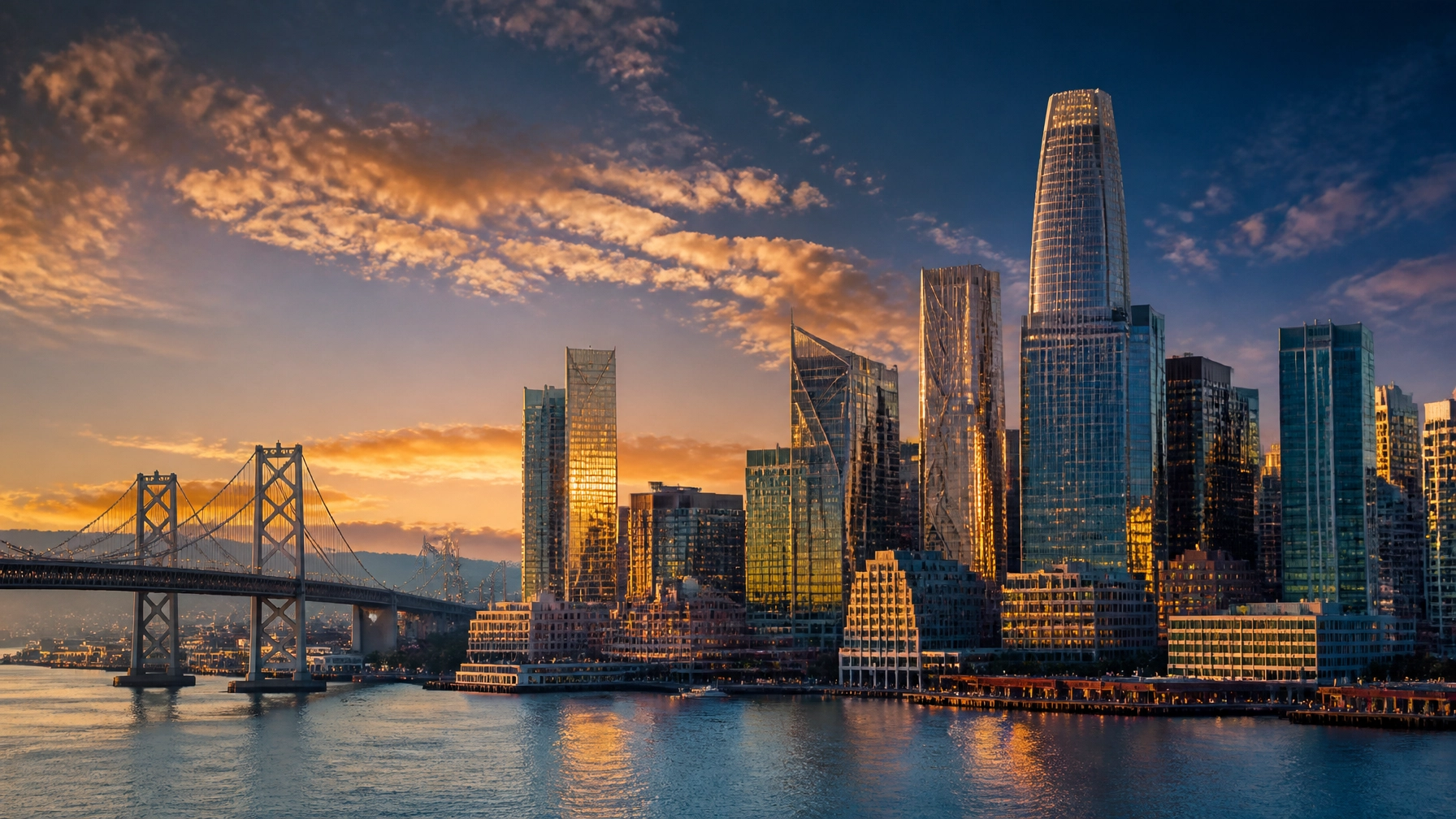
An analysis of the forces driving San Francisco’s extreme rental market shifts and how property owners and managers are navigating the 2026 surge.
Renting in San Francisco this year is a collection of horror stories. If you have been to an open house lately, you know the drill. You show up and find thirty other people already there. Many of them are holding completed leasing applications and checkbooks. Some apartments are leased within forty eight hours of hitting the market. The most aggressive prospective tenants are now offering to pay landlords well above the listed rent just to secure a roof over their heads. It is a level of competition that feels like a throwback to the mid-2010s, but with a sharper, more tech-driven edge.
Since December 2025, the acceleration of prices has been relentless. According to recent city economic reports, the AI boom is the primary engine behind this trend. We are seeing highly paid engineers and researchers flooding back into the city. They are taking up high-end inventory in SoMa, Mission Bay, and the Dogpatch, which is effectively squeezing out middle and lower income residents. The scarcity is real. The demand is concentrated. Compared with April 2025, rents have spiked nearly 15% citywide. This is not just a trend for luxury penthouses. It is affecting everything from studio apartments in the Tenderloin to three-bedroom homes in Noe Valley. At Atlas Premier Services and Consultants, we see the impact daily in the sheer volume of maintenance and renovation requests from owners trying to get units market-ready.
What you will learn from this report:
- The specific neighborhoods where rents have jumped over 25% in a single year.
- How the "AI Corridor" is redefining residential demand and driving bidding wars.
- Strategic actions for property owners to maintain asset value in a high-velocity market.
The AI Engine: Why 2026 is Different
The current surge is not a general economic lift. It is a targeted, industry-specific explosion. San Francisco has solidified its position as the global headquarters for artificial intelligence development. Companies that started with five people in 2023 now employ hundreds. These employees are not just looking for a place to sleep. They are looking for high-amenity buildings close to their offices in the "Area 2" and SoMa districts. This concentration has created a localized heat map of rental growth. When a single firm hires fifty people in a month, and all fifty want to live within a ten-block radius of the office, the market breaks. We are seeing a return to the "move-in ready" premium. Tenants with six-figure signing bonuses do not want to wait for repairs. They want polished, professionally managed spaces now.
Breaking Down the Zip Code Heat Map
The data from April 2026 shows a stark divide across the city. The 94107 zip code, covering parts of SoMa and Potrero Hill, is leading the pack with a 26% year-over-year increase. Close behind is 94115, including Pacific Heights, which saw a 24% jump. These areas are magnets for the new tech elite. Conversely, 94132 near Lake Merced saw a 9% decrease, reflecting a shift away from the city's outskirts toward the central core. This data suggests that proximity to the "AI action" is the single most important factor in rental pricing right now. For property managers, this means the pressure to perform is higher in central districts where tenants are paying a massive premium for location and quality.

Scarcity and the Supply Chain Crisis
The "horror stories" of the rental market are symptoms of a deeper supply issue. Construction of new multi-unit buildings has not kept pace with the influx of workers. While there are some major projects in the pipeline, the lead times are long. This has forced tenants to compete over existing stock. It has also put a spotlight on property maintenance. When vacancy is near zero, property owners often feel they can relax on upkeep. That is a mistake. High-paying tenants in 2026 are more litigious and have higher expectations for building services. Professional janitorial and janitorial standards are now a baseline requirement to keep these tenants satisfied.
The Role of Institutional Maintenance
In a market this hot, the physical condition of a property is a major differentiator. Atlas Premier Services and Consultants has seen an increase in demand for comprehensive commercial building maintenance and janitorial services. When tenants are paying over $5,000 for a two-bedroom apartment, they expect the lobby to be spotless and the elevators to work every time. Institutional-grade maintenance is no longer just for downtown office towers. It is now a necessity for residential complexes in high-growth zip codes. Owners who invest in regular, professional upkeep are seeing fewer disputes and better tenant retention, even when raising rents.
Strategic Renovations for High-Yield Units
With rents in some areas crossing the $5.6K mark for a median unit, owners are looking at their older inventory with a new lens. A basic kitchen refresh or a bathroom upgrade can now net an additional $500 to $1,000 per month in 2026 dollars. Our residential construction team often works with owners to fast-track these renovations between leases. The goal is a "concierge-level" finish. This includes smart home integration, high-end fixtures, and modern layouts. In the current market, the return on investment for a well-timed renovation is faster than we have seen in over a decade.
Management Strategies for Bidding Wars
Managing a property during a bidding war requires a delicate touch. It is tempting for owners to simply take the highest offer, but that can lead to long-term issues. We advise owners to look for stability. A tenant offering $500 over asking might be doing so out of desperation, which could signal future financial instability. Instead, focus on thorough vetting and professional onboarding. Clear communication from the start, backed by a robust property maintenance plan, sets the tone for a professional relationship. It ensures the tenant views the high rent as a fair exchange for a superior living experience.
Regulatory Realities and the Housing Choice Program
The legal landscape in San Francisco is also shifting. Programs like the Housing Choice-San Francisco Program are aiming to increase density, but they come with complex controls. Owners looking to expand their footprint to capitalize on the rental surge need expert development services. Navigating the planning department in 2026 still requires a deep understanding of local code and historic preservation. Whether it is a soft-story retrofit or a vertical addition in Noe Valley, the technical requirements are as stringent as ever.

Future Outlook: Will the Bubble Burst?
The question on everyone's mind is whether this 15% citywide spike is sustainable. While some analysts point to a potential cooling in late 2027, the current lack of inventory suggests that prices will remain elevated for the foreseeable future. The AI boom is not a fleeting trend. It is a fundamental shift in the city's economic base. As long as San Francisco remains the epicenter of this technology, the demand for housing in its urban core will stay intense. Owners who focus on quality, service, and strategic upgrades will be best positioned to weather any future corrections.
Timeline of the San Francisco Rental Evolution (2019-2026)
- April 2019: Baseline median rents established before global shifts.
- 2021-2022: Pandemic-era lows and the "tech exodus" narrative.
- Early 2023: Initial AI investment rounds spark a quiet return to the SoMa district.
- January 2024: Return-to-office mandates for major tech firms begin in earnest.
- June 2024: Vacancy rates in SoMa and Mission Bay drop below 7%.
- December 2025: Acceleration of rental prices begins citywide.
- February 2026: Bidding wars become a standard feature of the SF rental market.
- April 2026: Median citywide rent hits $3.3K, a 15% year-over-year increase.
- May 2026: Record-high rent growth of 26% recorded in the 94107 zip code.
Visual Data: Median Rent and Annual Change by Zip Code (April 2026)
| ZIP Code | Neighborhood Focus | Estimated Median Rent (Apr 2026) | Change Since Apr 2025 | Change Since Apr 2019 |
|---|---|---|---|---|
| 94107 | SoMa / Potrero Hill | $5,600 | +26% | +15% |
| 94115 | Pacific Heights | $4,000 | +24% | +15% |
| 94105 | South Beach | $5,600 | +23% | +15% |
| 94158 | Mission Bay | $5,500 | +22% | +14% |
| 94108 | Chinatown / Nob Hill | $2,500 | +18% | +1% |
| 94103 | SoMa / Mission | $3,400 | +17% | -2% |
| 94109 | Polk Gulch / Russian Hill | $3,200 | +11% | -1% |
| 94102 | Tenderloin / Civic Center | $2,300 | +9% | -1% |
| 94132 | Lake Merced | $2,700 | -9% | +6% |
| S.F. Citywide | All Districts | $3,300 | +15% | +5% |
Case Example: The 94107 Pivot
A local property owner in the 94107 district recently contacted us after a long-term tenant vacated a two-bedroom unit near the Caltrain station. The unit was in decent shape, but it looked like 2015. The owner's initial plan was to list it for $4,200. After a consultation with our construction management team, they decided on a three-week "speed renovation." We upgraded the lighting, installed a modern quartz countertop, and integrated a smart security system. The total investment was under $15,000.
The result? The unit was listed on a Tuesday. By Wednesday evening, the owner had six applications. The winning tenant offered $5,800 per month, which was $200 over the updated asking price. By investing in the physical asset and responding to the current aesthetic of the AI workforce, the owner increased their annual revenue by over $19,000. This case illustrates that in 2026, the market does not just reward ownership. It rewards active, intelligent management and high-quality maintenance.

What Smart Critics Argue
- Argument: This is a temporary AI bubble that will burst as soon as venture capital slows down.
- Response: While VC cycles fluctuate, the physical infrastructure and talent pool in San Francisco are now deeply entrenched. The demand is based on actual payroll growth, not just speculation.
- Argument: Rent control will eventually cap these increases and kill the incentive for owners to renovate.
- Response: Many of the high-end units seeing these spikes are newer construction or single-family homes that fall under different regulatory tiers. Regardless, maintaining quality is always the best defense against regulatory risk.
- Argument: The city is still too expensive for "normal" workers, and this will lead to another exodus.
- Response: This is a valid concern, but the current market data shows that for every person leaving, a higher-paid AI worker is arriving. The demographic shift is the reality owners must manage.
Key Takeaways for Property Owners
- Proximity to the "AI Corridor" (94107, 94105, 94158) is the primary driver of 20% plus rent growth.
- The citywide median rent of $3.3K is being pushed by a 15% annual spike in central districts.
- High-income tenants in 2026 demand institutional-grade maintenance and janitorial services.
- Quick, high-impact renovations are yielding immediate returns in the $500 to $1,000 per month range.
- Scarcity is real. Vacancy in prime areas is at its lowest level in over a decade.
- Bidding wars are back. Vetting for stability is more important than simply taking the highest offer.
- Regulatory compliance, specifically around density and retrofitting, remains a critical hurdle for expansion.
- Neighborhoods outside the central core, like 94132, are seeing rent decreases, highlighting the "centralization" trend.
6 Reader Actions
- At work: Review your property management contracts to ensure your maintenance teams can handle the increased volume and tenant expectations of the 2026 market.
- At home: If you own a residential investment property, conduct a "market-ready" audit to identify small upgrades that could yield significant rent increases.
- In the community: Support local initiatives that streamline the permitting process for new housing to help alleviate the long-term supply crisis.
- In civic life: Stay informed on San Francisco Planning Department hearings regarding the Housing Choice Program and other density initiatives.
- Extra step: Schedule a professional building envelope inspection to ensure your high-value assets are protected from the long-term effects of neglect.
- Consult: Reach out to a general contractor to discuss the feasibility of adding a unit or expanding your existing footprint.
FAQ
Q: Why is the 94107 zip code seeing such extreme growth compared to others?
A: 94107 is the heart of the AI and tech boom. Its proximity to major transit hubs and the new "AI campuses" makes it the most desirable location for the high-paid workforce arriving in 2026.
Q: Are bidding wars legal in San Francisco?
A: Yes. While rent control laws limit annual increases for existing tenants, the initial rent for a new lease in a non-rent-controlled building can be determined by market demand.
Q: Should I prioritize a full remodel or a quick refresh?
A: In the 2026 market, a "speed renovation" that addresses lighting, kitchens, and tech integration often provides a better immediate return than a multi-month full gut remodel.
Q: How does the AI boom affect commercial property maintenance?
A: The AI companies themselves require high-end, clean, and modern office spaces. This has raised the bar for janitorial services across both residential and commercial sectors.
Q: Is it a good time to buy more rental property in SF?
A: For those with the capital to invest in the high-growth "AI Corridor," the fundamentals of low supply and high demand are very strong, though entry costs remain high.
Ready to move your project from concept to completion?
Contact Atlas Premier Services and Consultants today.
Atlas Premier Services and Consultants
Strategic Solutions. Trusted Execution.
Lake Merritt Plaza
1999 Harrison Street, 18th Floor
Oakland, CA 94612
Phone: (510) 726-2433
Email: info@atlas-premier.com
Sources
- Multifamily Affordable Housing, "Why Renter Demand is Surging Across the San Francisco Bay Area," 2025, https://multifamilyaffordablehousing.com/why-renter-demand-is-surging-across-the-san-francisco-bay-area/
- Relocity, "Bay Area Market Rental Trends Report," Q1 2026, https://www.relocity.com/blog/bay-area-market-rental-trends-report
- Marcus & Millichap, "Northern California Rental Market Dynamics," 2025, https://mmproperties.com/northern-california-rental-market-dynamics/
- Apartments.com, "Rent Market Trends: San Francisco, CA," May 2026, https://www.apartments.com/rent-market-trends/san-francisco-ca/
- Zillow, "Market Trends: San Francisco, CA," 2026, https://www.zillow.com/rental-manager/market-trends/san-francisco-ca/
- RentCafe, "Average Rent Market Trends: San Francisco," Late 2025, https://www.rentcafe.com/average-rent-market-trends/us/ca/san-francisco/
- ApartmentList, "Rental Data and Price Changes," April 2026.
Disclaimer: This content is for general informational purposes only and does not constitute legal, financial, engineering, construction, regulatory, or other professional advice. Reading this content does not create a client or contractual relationship with Atlas Premier Services & Consultants. Because every project and property is different, consult qualified professionals regarding your specific circumstances. Atlas Premier Services & Consultants makes no warranties regarding the accuracy or completeness of this information and is not responsible for third-party content or references. Testimonials, examples, and case studies are illustrative only and do not guarantee similar results.