
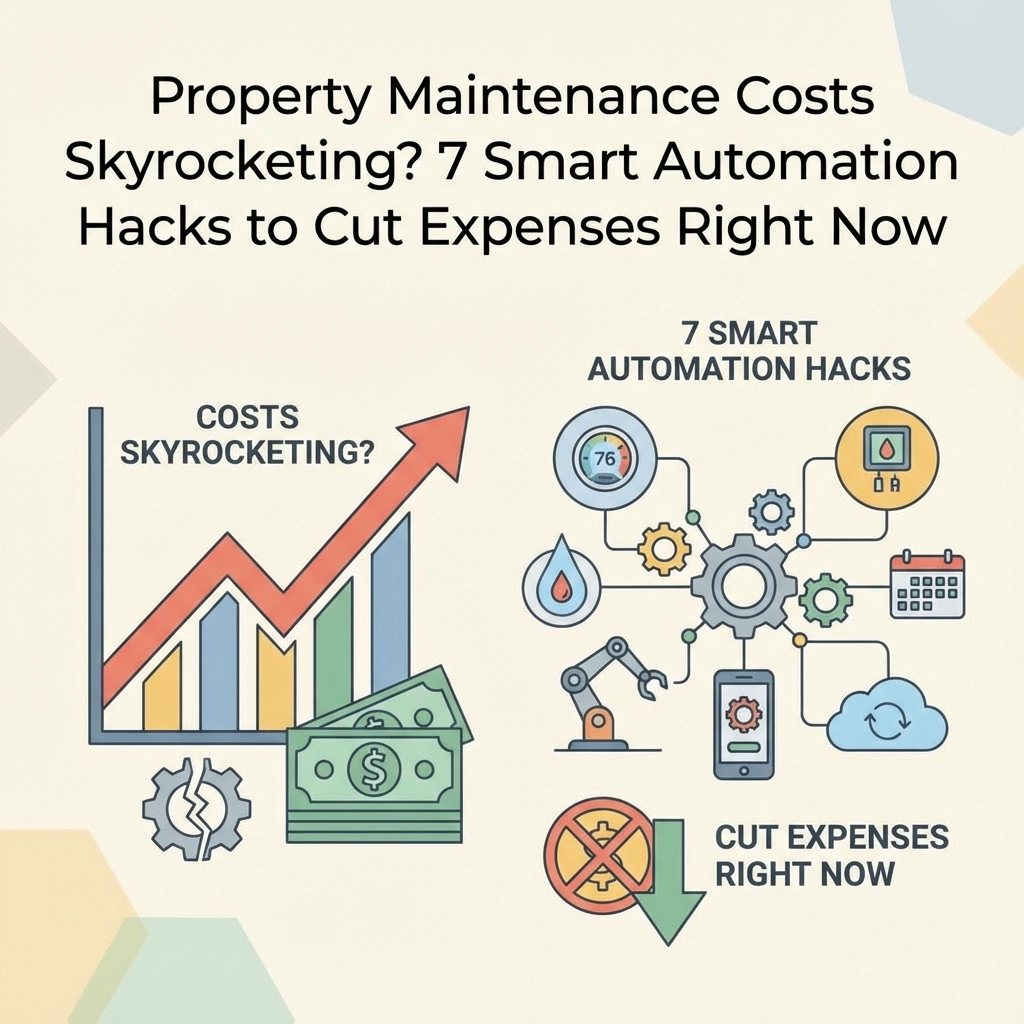
Bay Area property owners are feeling the squeeze. With maintenance costs climbing 12-15% year-over-year and labor shortages driving up service fees, we're seeing portfolio managers scramble for solutions that actually move the needle on NOI.
The good news? Smart automation isn't just buzz anymore: it's delivering measurable cost reductions for properties across San Francisco, Oakland, and San Jose. We've compiled seven proven automation strategies that are cutting maintenance expenses by 20-40% for our clients at Atlas Premier Services & Consultants.
1. Deploy Predictive Maintenance Systems to Eliminate Emergency Repairs
The biggest budget killer? Reactive maintenance calls at 2 AM when your HVAC system fails during a heat wave. Predictive maintenance flips this script entirely.
Smart sensors monitor vibration patterns, temperature fluctuations, and performance metrics across your building systems. When AI detects anomalies: like a pump running hot or unusual energy consumption: you get alerts weeks before failure occurs.

Real impact: One 240-unit Oakland complex reduced emergency repair calls by 67% after installing predictive monitoring on their HVAC and elevator systems. Annual maintenance costs dropped from $89,000 to $31,000.
Bay Area bonus: With PG&E rates hitting record highs, predictive systems also optimize energy consumption by identifying inefficient equipment before it drives up utility bills.
2. Install Smart Water Management to Stop Leaks Before They Start
Water damage claims in multifamily properties average $15,000 per incident in the Bay Area: and that's before you factor in tenant displacement, lost rent, and insurance deductibles.
Smart water systems use IoT sensors to monitor water pressure, flow rates, and usage patterns throughout your building. When they detect unusual activity: like a toilet running continuously or a pipe leak: automatic shutoff valves activate within seconds.
Beyond emergency prevention: These systems identify inefficient fixtures, monitor for tenant water waste, and provide usage data that helps you negotiate better utility rates with providers.

We recently installed smart water monitoring in a 180-unit Fremont complex that was averaging three water damage claims annually. They haven't had a single major incident since implementation eight months ago.
3. Centralize Building Operations on One Management Platform
Managing multiple software systems for access control, work orders, tenant communication, and energy monitoring isn't just inefficient: it's expensive. Each platform requires separate licenses, training, and integration costs.
Modern property management platforms consolidate everything into unified dashboards that provide real-time visibility across all building operations. You can track maintenance requests, monitor energy usage, manage vendor access, and communicate with tenants from one interface.
Cost savings breakdown:
- Eliminate 3-5 separate software subscriptions: $2,400-$6,000 annually
- Reduce administrative time by 40%: $15,000+ in labor savings
- Faster issue resolution prevents small problems from becoming expensive repairs
4. Automate HVAC Scheduling and Predictive Maintenance
HVAC typically represents 35-45% of your total energy costs in Bay Area properties. Smart thermostats with occupancy sensors and predictive maintenance capabilities can slash both energy and repair expenses.
These systems learn occupancy patterns and automatically adjust temperatures when units are vacant. They also monitor system performance and schedule maintenance during vacancy periods, minimizing tenant disruption while preventing costly breakdowns.

Pro tip: Integration with your property management system allows HVAC automation based on actual lease data, not just motion sensors. Empty units stay at efficient temperatures, while occupied units maintain comfort automatically.
5. Implement AI-Powered Work Order Triage and Vendor Management
Not all maintenance requests require immediate attention: but determining priority levels manually wastes time and money. AI-powered systems automatically categorize and route work orders based on urgency, tenant history, and potential impact.
Smart triage systems also match requests with the most cost-effective vendor based on location, availability, and historical performance data. This eliminates overpaying for routine repairs while ensuring emergencies get immediate response.
Automation benefits:
- Reduce reactive maintenance calls by 45%
- Optimize vendor utilization and pricing
- Prevent minor issues from escalating into major repairs
- Track vendor performance with automated scoring
6. Deploy Smart Access Control to Reduce Security and Administrative Costs
Traditional key management is expensive and risky. Lost keys require re-keying entire buildings, temporary access for vendors creates security vulnerabilities, and administrative overhead adds up quickly.
Smart access control systems use mobile apps, keypads, or fobs that can be programmed, monitored, and revoked remotely. You can grant temporary access to maintenance vendors, track entry/exit times, and eliminate the security risks of physical key management.

Bay Area application: With package theft rates climbing 23% in San Francisco alone, smart access control for package rooms and common areas provides additional security value beyond maintenance cost savings.
7. Leverage Data Analytics for Preventive Maintenance Planning
The most expensive maintenance is the kind you don't see coming. Smart building analytics platforms collect data from all your automated systems and identify patterns that predict maintenance needs.
Instead of replacing HVAC filters on arbitrary schedules, you replace them based on actual usage and air quality data. Instead of scheduling elevator maintenance quarterly, you service elevators when performance metrics indicate optimal timing.
Data-driven decision making:
- Optimize maintenance schedules based on actual usage patterns
- Identify equipment that consistently underperforms
- Plan capital expenditures with predictive lifecycle modeling
- Track ROI for each automation investment

The Bay Area Advantage: Local Implementation Support
Implementing these automation strategies requires expertise in both technology integration and local building codes. California's energy efficiency requirements, seismic safety standards, and tenant protection laws all impact how automation systems must be configured.
At Atlas Premier Services & Consultants, we specialize in seamless automation integration for Bay Area properties. Our team handles everything from initial system design through ongoing maintenance and optimization.
Our comprehensive approach includes:
- Property assessment and automation planning
- System installation and integration
- Staff training on new platforms
- Ongoing maintenance and optimization support
- Compliance with local building codes and regulations
We've helped property owners across the Bay Area reduce maintenance costs by an average of 32% while improving tenant satisfaction and building performance.
Getting Started: Your Next Steps
The properties seeing the biggest cost savings are those that implement automation strategically, not piecemeal. Start with the systems that offer the highest ROI for your specific property type and tenant profile.
Ready to cut your maintenance costs? Contact Atlas Premier Services & Consultants at (510) 726-2433 or info@atlas-premier.com for a complimentary property automation assessment. We'll analyze your current expenses and provide a detailed implementation plan with projected cost savings.
Visit www.atlas-premier.com to learn more about our building automation services and see case studies from Bay Area properties that have successfully reduced maintenance costs through smart technology integration.
Don't let rising maintenance costs eat into your NOI when proven automation solutions are available today. The question isn't whether you can afford to automate( it's whether you can afford not to.)