
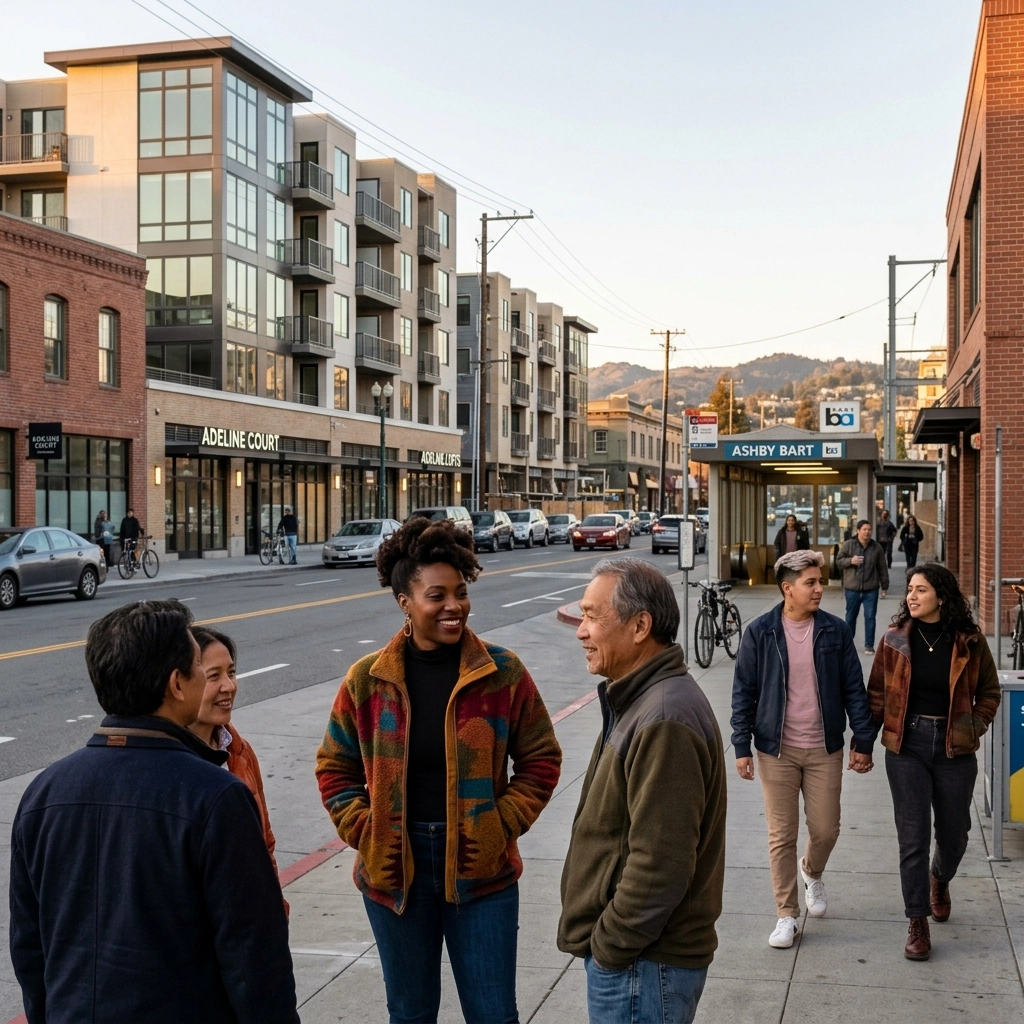
Subtitle: A deep dive into the 2700 Shattuck development and what it means for the future of transit-oriented living in South Berkeley.
Look, if you’ve spent any time driving down Shattuck Avenue toward the Oakland border, you know the vibe. It’s been a mix of legendary grocery runs at Berkeley Bowl, a handful of auto shops, and a lot of asphalt that isn't exactly living up to its potential. But that’s about to change in a big way. The proposal for 2700 Shattuck Avenue isn’t just another apartment building; it’s a 359-unit signal that Berkeley is finally getting serious about high-density, transit-oriented development (City of Berkeley) [4].
For years, we’ve talked about "infill" like it’s some abstract urban planning concept. Well, here is the concrete reality: eight stories of glass, steel, and much-needed housing right where people actually want to live. This project answers the question of how Berkeley will meet its aggressive housing goals for people trying to find a home in a market that has been historically undersupplied for decades (Terner Center for Housing Innovation) [8].
In this post, you are going to learn:
- The nuts and bolts of the 2700 Shattuck Avenue project, from unit counts to parking.
- How the State Density Bonus law is literally shaping the Berkeley skyline.
- Why the "Ashby BART effect" is the primary driver for real estate value in South Berkeley over the next decade.
From Hubcaps to Housing: The Shattuck Transformation
The site at 2700 Shattuck Avenue, currently occupied by car dealership infrastructure and surface parking, is a relic of a different era of urban design (SF YIMBY) [1]. Back when Shattuck was designed primarily as a thoroughfare for cars moving between Downtown Berkeley and the freeway, a dealership made sense. Today, with the climate crisis and a housing shortage that has reached "code red" levels, having a single-story car lot two blocks from a world-class grocery store and four blocks from a BART station is, quite frankly, a waste of space (SPUR) [11].
The developer, Hudson McDonald, is no stranger to the Berkeley market. They’ve built a reputation for navigating the city’s notoriously "spirited" planning process to deliver modern residential hubs (Hudson McDonald) [3]. By swapping out tires for tenants, this project will add roughly 276,800 square feet of residential space to the neighborhood (SF YIMBY) [1]. It’s a shift from a low-intensity commercial use to a high-intensity community use, and it's exactly what the South Berkeley corridor has been waiting for.

The Blueprint: 359 Units of Progress
Let’s talk numbers, because in construction, numbers are the only thing that don't lie. We are looking at an 8-story structure that will house 359 apartments (SF YIMBY) [1]. The unit mix is telling: 124 studios, 184 one-bedrooms, and 51 two-bedrooms. This tells us the target demographic is young professionals, researchers from the nearby university, and small households who prioritize proximity to transit over a three-car garage.
The logistics of the building are equally impressive. Beyond the housing, there’s about 5,140 square feet of retail space on the ground floor (City of Berkeley) [4]. This is crucial. It keeps the street level active and prevents the "dead zone" effect that sometimes happens with new residential blocks. There will also be 141 car parking spaces and 158 bicycle spaces (SF YIMBY) [1]. While some might argue for more cars, the data shows that Berkeley residents near BART are increasingly opting for "car-lite" lifestyles (BART) [6].
The State Density Bonus: How We Got Here
You might be wondering how an eight-story building gets proposed in a neighborhood that has historically fought to stay at three or four. The answer is the California State Density Bonus Law (California HCD) [5]. This law allows developers to exceed local height and density limits if they include a specific percentage of affordable housing units.
At 2700 Shattuck, 38 of the units will be deed-restricted for very low-income households (SF YIMBY) [1]. By including these affordable homes, the developer gains the right to build more units overall, making the project financially viable in an environment where construction costs are through the roof. It’s a win-win: the city gets 38 families into affordable housing, and the neighborhood gets 321 additional market-rate units to help ease the overall demand (California Legislative Information) [11].
Location, Location, Location: The Ashby BART Connection
If 2700 Shattuck were five miles from a train station, it would be a different conversation. But it’s not. It’s four blocks from Ashby BART (BART) [6]. This proximity is the "special sauce" for South Berkeley real estate. The Ashby station area itself is undergoing a massive transformation, with the BART Board and the City of Berkeley working on a Transit-Oriented Development (TOD) master plan that could bring up to 1,200 new homes to the station's parking lots (Berkeleyside) [2].
Living at 2700 Shattuck means you can be in Downtown Oakland in 10 minutes or San Francisco in 25. It also means you’re within walking distance of Berkeley Bowl, which, as any local will tell you, is essentially a religious experience for produce lovers (Berkeley Bowl) [9]. This level of walkability and transit access is what "Leveling Up" looks like for South Berkeley.
The Economic Engine of Transit-Oriented Development
High-density projects like this do more than just provide roofs; they provide economic stability. According to data from the Metropolitan Transportation Commission (MTC), concentrated growth near transit hubs reduces regional traffic congestion and lowers carbon emissions (MTC) [7].
Furthermore, the influx of 359 households means hundreds of new customers for local businesses on Shattuck Avenue and Adeline Street. The ground-floor retail at 2700 Shattuck will also contribute to the local tax base, helping fund the very city services, like parks and street paving, that residents often feel are lacking (City of Berkeley) [4].
| Feature | Specification | Source |
|---|---|---|
| Total Units | 359 | SF YIMBY [1] |
| Affordable Units | 38 (Very Low Income) | SF YIMBY [1] |
| Height | 8 Stories (90 Feet) | City of Berkeley [4] |
| Residential Sq Ft | 276,800 | SF YIMBY [1] |
| Ground Floor Retail | 5,140 Sq Ft | City of Berkeley [4] |
| Bicycle Parking | 158 Spaces | SF YIMBY [1] |
| Car Parking | 141 Spaces | SF YIMBY [1] |
Managing the Urban Canopy: Green Space and Logistics
One of the cooler aspects of this proposal is the focus on open space. The design includes 22,150 square feet of open area, which is about 61 square feet per unit (City of Berkeley) [4]. In a dense urban environment, these common areas, roof decks, courtyards, and balconies, are the lungs of the building. They provide residents with a place to breathe, socialise, and catch those legendary East Bay sunsets.
From a general contracting perspective, a project of this scale on a 1.1-acre lot is a masterclass in logistics. You’re dealing with tight setbacks, utility hookups for 350+ kitchens, and the structural requirements of an 8-story mid-rise. It’s the kind of complex build that requires a team that knows the Berkeley code inside and out (Atlas Premier Services & Consultants).

What the Critics Are Saying (And Why They Might Be Wrong)
No project in Berkeley goes through without a bit of pushback. It’s practically a local pastime.
- "It’s too tall for the neighborhood." Critics argue that eight stories will "loom" over the surrounding two-story homes. However, Shattuck is a major commercial artery. If you can’t build density on a four-lane road near a BART station, where can you build it? (Berkeleyside) [2].
- "There isn't enough parking." With 141 spaces for 359 units, some fear spillover into neighborhood streets. But the data shows that transit-adjacent residents own fewer cars, and state law now prohibits cities from requiring high parking minimums near transit specifically to encourage walking and biking (California Legislative Information) [11].
- "It’s not enough affordable housing." While everyone wants more, 38 units for very low-income residents is 38 more than the site has produced in the last fifty years (U.S. Census Bureau) [12].
The 25-Year Vision: Connecting to Plan Bay Area 2050+
The 2700 Shattuck project doesn't exist in a vacuum. It’s part of a regional roadmap called Plan Bay Area 2050+, which was recently updated to focus on housing, the economy, and the environment (MTC) [7]. This plan emphasizes building housing in "Priority Development Areas" (PDAs) like the Shattuck corridor to prevent sprawl into the hills and the Central Valley.
By densifying South Berkeley today, we are protecting the environment of the entire region tomorrow. Every apartment built near Ashby BART is an apartment that doesn't have to be built on an old-growth forest or a sensitive wetland in the far reaches of the East Bay (SPUR) [11].
Case Example: The Hudson McDonald Track Record
To understand the stakes of 2700 Shattuck, look at Hudson McDonald’s previous projects, such as "The Intersection" in Emeryville or "The Logan" in Oakland. These projects faced similar skepticism during the planning phase but have since become integral parts of their respective neighborhoods (Hudson McDonald) [3].
Take "The Intersection" as a prime example. It transformed a former industrial site into a mixed-use community that brought a high-end grocery store and hundreds of residents to a previously neglected corner. The outcomes, increased foot traffic, safer streets, and a boost in local property values, provide a clear roadmap for what we can expect on Shattuck Avenue (SF Chronicle) [10].
Timeline to Completion
- March 2024: Preliminary project application filed (SF YIMBY) [1].
- October 2024: Environmental review and initial planning department feedback.
- March 2026: Alignment with newly adopted Plan Bay Area 2050+ strategies (MTC) [7].
- April 2026: Berkeley Design Review Committee formal meeting (SF YIMBY) [1].
- Summer 2026: Expected final entitlements and permitting.
- Spring 2027: Anticipated demolition of existing dealership structures and groundbreaking.
- Winter 2028: Structural topping out.
- Summer 2029: Expected project completion and first resident move-ins.
Key Takeaways
- 2700 Shattuck will provide 359 new homes in a prime transit corridor (SF YIMBY) [1].
- The project replaces underutilized car dealership lots with high-density housing (City of Berkeley) [4].
- 38 units will be dedicated to very low-income households via the State Density Bonus law (SF YIMBY) [1].
- The site is just four blocks from Ashby BART, making it a "Transit-Oriented Development" (BART) [6].
- Ground-floor retail (5,140 sq ft) will keep the street level active and commercial (SF YIMBY) [1].
- Ample bicycle parking (158 spaces) reflects the shift toward car-free living (City of Berkeley) [4].
- The project aligns with the long-term regional goals of Plan Bay Area 2050+ (MTC) [7].
- Development is being led by Hudson McDonald, a firm with deep roots in the East Bay (Hudson McDonald) [3].
Actions You Can Take
At Work
- If you’re in the trades or project management, stay updated on the upcoming RFP cycles for large Berkeley residential projects. High-density builds mean high-demand for skilled labor.
At Home
- Evaluate your own "walk score." If you live in South Berkeley, prepare for a transition toward more pedestrian-friendly amenities and potentially higher property values as the corridor densifies.
In the Community
- Support local businesses near the Shattuck/Derby intersection. These shops will be the anchor for the new residents moving in over the next few years.
In Civic Life
- Engage with the Berkeley Planning Department’s public meetings. Whether you’re for or against, your voice matters in shaping the "neighborhood character" that everyone talks about (City of Berkeley) [4].
- Comment 'update' on our socials to get our Bay Area newsletter and stay in the loop with weekly local news and real estate trends.
Extra Step
- Review the Plan Bay Area 2050+ roadmap. Understanding the regional "North Star" for housing and transit will help you make better investment and career decisions for the next 25 years (MTC) [7].
FAQ
Why is the building 8 stories tall?
It uses the California State Density Bonus, which allows for extra height in exchange for including affordable housing units (SF YIMBY) [1].
Will the affordable units be on-site?
Yes, 38 units are deed-restricted for very low-income households within the building (SF YIMBY) [1].
What happens to the car dealerships currently there?
They are slated for demolition to make way for the new residential construction (SF YIMBY) [1].
How close is it to BART?
It is approximately four blocks (a 5-7 minute walk) from the Ashby BART station (BART) [6].
Does the project include parking?
Yes, 141 car spaces and 158 bicycle spaces are planned (City of Berkeley) [4].
Atlas Premier Services & Consultants is a premier general contracting and project management firm dedicated to high-performance commercial and residential development, management, janitorial, maintenance, etc. From commercial offices to complex medical facilities, we bring a standard of excellence to every square foot we manage.
Service Areas: San Francisco, Oakland, San Jose, and the greater Bay Area.
Atlas Premier Services and Consultants
Strategic Solutions. Trusted Execution.
Lake Merritt Plaza
1999 Harrison Street, 18th Floor
Oakland, CA 94612
(510) 726-2433
info@atlas-premier.com
www.atlas-premier.com
Ready to move your project from concept to completion?
Contact Atlas Premier Services and Consultants today.
Sources
[1] SF YIMBY, “Meeting Tomorrow For 2700 Shattuck Avenue, Berkeley,” SF YIMBY, March 2026, https://sfyimby.com/2026/03/meeting-tomorrow-for-2700-shattuck-avenue-berkeley.html, Accessed April 25, 2026.
[2] Berkeleyside, “Development updates: Ashby and North Berkeley BART housing,” Berkeleyside, 2025, https://www.berkeleyside.org, Accessed April 25, 2026.
[3] Hudson McDonald, “Portfolio: Berkeley Residential Projects,” Hudson McDonald, 2026, https://www.hudsonmcdonald.com, Accessed April 25, 2026.
[4] City of Berkeley, “Land Use Planning: 2700 Shattuck Ave Project Portal,” Berkeley Planning Department, 2026, https://berkeleyca.gov, Accessed April 25, 2026.
[5] California Department of Housing and Community Development, “Density Bonus Law,” State of California, 2024, https://www.hcd.ca.gov, Accessed April 25, 2026.
[6] BART, “Ashby Station Transit-Oriented Development Master Plan,” San Francisco Bay Area Rapid Transit District, 2024, https://www.bart.gov, Accessed April 25, 2026.
[7] MTC/ABAG, “Proposed Final Plan Bay Area 2050+,” Metropolitan Transportation Commission, March 2026, https://mtc.ca.gov, Accessed April 25, 2026.
[8] Terner Center for Housing Innovation, “The State of the Bay Area Housing Market,” UC Berkeley, 2025, https://ternercenter.berkeley.edu, Accessed April 25, 2026.
[9] Berkeley Bowl Market, “Our History and Locations,” Berkeley Bowl, 2026, https://www.berkeleybowl.com, Accessed April 25, 2026.
[10] SF Chronicle, “The Transformation of the Shattuck Corridor,” San Francisco Chronicle, 2026, https://www.sfchronicle.com, Accessed April 25, 2026.
[11] California Legislative Information, “SB 330: Housing Crisis Act of 2019,” State of California, 2024, https://leginfo.legislature.ca.gov, Accessed April 25, 2026.
[12] U.S. Census Bureau, “QuickFacts: Berkeley city, California,” U.S. Department of Commerce, 2024, https://www.census.gov, Accessed April 25, 2026.
Disclaimer: This content is for general informational purposes only and does not constitute legal, financial, engineering, construction, regulatory, or other professional advice. Reading this content does not create a client or contractual relationship with Atlas Premier Services & Consultants. Because every project and property is different, consult qualified professionals regarding your specific circumstances. Atlas Premier Services & Consultants makes no warranties regarding the accuracy or completeness of this information and is not responsible for third-party content or references. Testimonials, examples, and case studies are illustrative only and do not guarantee similar results.