

The Bay Area is moving several long-delayed projects from entitlement and planning into visible construction. That shift creates opportunity, but it also puts pressure on owners to control infrastructure sequencing, procurement, labor, and building operations before costs move again. The practical thread for Wednesday morning is simple: a project is not ready because the drawings are approved. It is ready when the site, schedule, workforce, water systems, and reporting obligations are aligned.
Bay Area Development and Construction Pulse
Candlestick Park finally enters construction
San Francisco broke ground on the former Candlestick Park site on September 9. FivePoint’s 270-acre plan calls for 7,200 homes at full buildout, including approximately 700 homes in the first phase, with 314 affordable homes. The wider neighborhood will also include 2.8 million square feet of innovation district space, 2.5 miles of public waterfront, 100 acres of parks and open space, and 60 city blocks. San Francisco’s mayoral office [1]
The first phase depends on roads, utilities, and a safer water system serving the broader community. Takeaway: owners working on large phased sites should treat horizontal infrastructure as a separate delivery package, not a footnote to vertical construction.
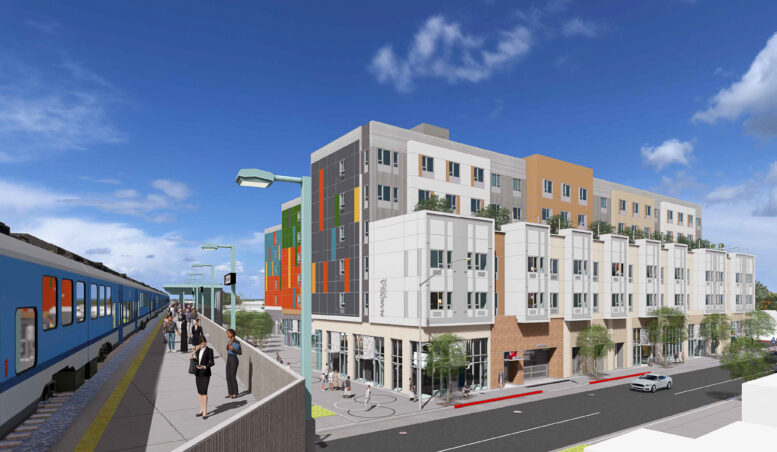
West Oakland BART parking gives way to housing
Construction is beginning at the West Oakland BART station parking lot. The full transit-oriented development is planned for 762 homes, including 240 affordable units. The first phase removes 240 of the existing 440 parking spaces, leaving 200 spaces on a first-come, first-served basis. Eventually, all station parking at the site will be removed. [KTVU] [2]
The first permitted building at 1470 Fifth Street is a six-story, 240-unit affordable housing project with 12,850 square feet of retail, a 50-car garage, and 158 bicycle spaces. [SF YIMBY] [3] Takeaway: transit-adjacent housing can deliver public benefit, but owners and operators must plan construction access, commuter disruption, resident move-in logistics, and long-term parking communication together.
Berkeley’s Amoeba Music project clears a major use permit
Berkeley’s Zoning Adjustments Board approved a use permit for seven stories of housing above the existing Amoeba Music store on Telegraph Avenue. The project would add 68 units and 300 bedrooms, including seven very-low-income units. The existing store would be renovated, an adjacent building would be demolished, and the People’s History of Telegraph Avenue mural would be preserved and restored. [The Daily Californian] [4]
The project still faces a September 28 appeal deadline, final Landmarks Preservation Commission review, and building permit requirements. Takeaway: use permit approval is a major gate, not a construction start. Owners should keep appeal exposure, landmark conditions, and tenant protection measures visible in the baseline schedule.
Stanford submits its next growth plan
Stanford University submitted its StanfordNext growth plan to Santa Clara County on September 9. The proposal includes 1.8 million square feet of academic and academic-support space, 150,000 square feet of community-supportive space, 2,500 student beds, and about 500 faculty and staff homes. The workforce housing proposal includes 84 very-low-income units, 63 low-income units, and additional missing-middle housing for households earning up to 150 percent of area median income. [Palo Alto Online] [5]
Stanford also proposed a $100 million regional fund for affordable housing, transportation, education, and related partnerships. County review and public hearings remain ahead. Takeaway: large institutional growth plans will be judged on housing and transportation commitments as much as on building area.
395 Third Street is refiled as a larger tower
Strada Investment Group has refiled plans for a 45-story, 480-foot residential tower at 395 Third Street in SoMa. The proposal includes 501 apartments, 51 very-low-income affordable units, 608,500 square feet of total space, a seven-story, 150-car podium garage, and 239 bicycle spaces. The project invokes Senate Bill 423 and the State Density Bonus Law. Cost and construction timing have not been established. [SF YIMBY] [6]
Takeaway: re-entitlement can increase housing capacity, but it also resets design review, financing, procurement, and schedule assumptions. Do not carry an old construction budget into a new entitlement package.

Building Operations and Facilities Insight
Inspect the envelope before the first major rain
Bay Area owners have a short window to inspect building envelopes before winter weather exposes weak points. Start with roof drains, scuppers, flashing, sealants, facade joints, window perimeters, balconies, podium decks, and garage waterproofing. These areas fail differently, but they share one problem: a small opening can turn into interior damage, mold, tenant disruption, or a structural repair if no one tracks it.
Run a 30-day envelope walk. Divide the property by elevation, roof area, garage level, and podium zone. Photograph each condition with the location, date, and weather recorded. Prioritize active leaks first. Then address life-safety issues, loose materials, failed guards, blocked drainage, and conditions that can damage occupied spaces.
Use a leak log that records:
- Exact location and affected room or tenant area
- Date discovered and weather conditions
- Photos before and after temporary repairs
- Suspected entry point
- Vendor assigned and response deadline
- Permanent repair status
- Date of the next rain check
EPA WaterSense recommends routine meter monitoring, leak detection, prompt repair, and clear documentation as part of a facility water management program. Its guidance also supports submetering major water uses and maintaining a map of meters and submeters. [EPA WaterSense] [7] [EPA WaterSense at Work] [8]
For larger properties, add infrared or moisture testing where visual inspection cannot identify the extent of concealed wetting. Require vendors to separate emergency response from permanent repair. A service-level agreement should specify response time, temporary protection, written findings, repair authorization, and closeout documentation.
For planning purposes, an annual envelope reserve target can be estimated as:
Replacement cost ÷ remaining useful life, plus a contingency allowance.
That is a planning method, not professional advice. A qualified building-envelope consultant should confirm the condition, remaining life, repair scope, and replacement cost. The action this week is straightforward: schedule the walk, update the leak log, and ask vendors to identify what can be repaired before the rainy season rather than after the first interior complaint.
Permitting, Codes, and Compliance Watch
The 2025 Title 24 code is now active
The 2025 California Building Standards Code was published July 1, 2025, and became effective January 1, 2026. Applications submitted on or after the effective date should be checked against the applicable parts of Title 24, including the California Building Code, Energy Code, Fire Code, Existing Building Code, and CALGreen. [California Building Standards Commission] [9]
Action: confirm the code edition and local amendments on every active permit matrix. Do not assume a previously prepared drawing set still reflects current requirements.
Cal/OSHA reinforces heat protections
Cal/OSHA’s September 9 alert covered the Bay Area and reminded employers that outdoor shade must be available when temperatures exceed 80 degrees. Construction employers must use high-heat procedures at or above 95 degrees. Indoor protections apply when temperatures reach 82 degrees. Employers also need water, cool-down areas, training, emergency procedures, and a written prevention plan. [California Department of Industrial Relations] [10]
The outdoor standard requires construction employers to monitor workers, maintain communication, conduct pre-shift meetings, and designate personnel who can call for emergency services. [Title 8, Section 3395] [11] Action: verify the site plan, training records, shade locations, water supply, and heat response procedures before the next hot-weather workday.
San Francisco schedule reporting remains active
Projects subject to San Francisco’s Inclusionary Housing Program or the State Density Bonus Law must provide construction timing updates when requested by the Planning Department. The city contacts covered projects every six months. Sponsors must resubmit when estimated dates change. The requested information includes permit issuance, final completion, occupancy, and affordable and market-rate marketing dates. [San Francisco Mayor’s Office of Housing and Community Development] [12]
Action: assign one person to own the schedule submission. Keep the reported dates consistent with the lender schedule, contractor schedule, and affordable housing compliance record.
Workforce, Materials, and Vendor Notes
Input costs are still moving sharply
The Associated General Contractors of America reported that nonresidential construction input prices increased 8.9 percent from August 2025 to August 2026. Diesel rose 77.8 percent, aluminum mill shapes rose 27.3 percent, steel mill products rose 23.4 percent, and copper and brass mill shapes rose 20.9 percent. The figures are based on data released September 10, 2026. [AGC of America] [13]
AGC also reported that 55 percent of survey respondents had projects canceled, postponed, or scaled back during the prior six months. Action: use quote expiration dates, escalation clauses, alternates, and early procurement for exposed materials. A low bid that expires before award is not a project budget.
Skilled labor remains a schedule risk
An AGC and NCCER survey released September 3 found that 42 percent of respondents had project delays caused by shortages of their own workers or subcontractors. Among firms with craft openings, 88 percent said those positions were as hard or harder to fill than a year earlier. [AGC and NCCER] [14]
Action: ask trade partners for named staffing assumptions, not just a start date. Confirm foreman coverage, critical-path crews, backup subcontractors, and procurement responsibilities during buyout.
Featured Project or Case Study
Amoeba Music shows the difficulty of building above a cultural anchor
The proposed Amoeba Music project on Telegraph Avenue is a useful case study in historic adaptive reuse and community-serving development. The project would place seven stories of housing above a renovated record store, creating 68 units and 300 bedrooms. Seven units would be designated for very-low-income households. The plan also calls for demolition of an adjacent building while keeping the existing Amoeba storefront facade and preserving and restoring the People’s History of Telegraph Avenue mural. [The Daily Californian] [4]
The project’s path is not complete. Berkeley’s Zoning Adjustments Board approved the use permit, but opponents have until September 28 to appeal. Final Landmarks Preservation Commission review and a building permit remain before initial construction can begin.
The operator lesson is the part worth watching. A retail business that remains open during construction needs a phasing plan that protects customer access, deliveries, egress, utilities, and emergency response. Music retail also creates practical concerns around dust, vibration, noise, and temporary closures. The contractor will need clear separation between construction traffic and customer movement, especially during demolition of the neighboring building.
Historic elements need their own protection plan. The mural and storefront cannot be treated as ordinary finish work. Their condition should be documented before mobilization, with vibration monitoring, temporary protection, inspection hold points, and a conservation specialist involved where required.
This is the kind of project where design-build coordination can reduce avoidable conflict, but only when the cultural, retail, structural, and life-safety requirements are addressed before the first demolition shift. ZAB approval moves the project forward. It does not remove the work.
Industry Calendar
Event: UC and the Law 2026, NorCal
Date and Time: Wednesday, September 16, 2026, 9:00 AM to 4:00 PM PDT
Venue: Downtown Oakland. Exact address not published.
Cost: Not published.
Register: UC Procurement event page
Host: UC Procurement
Contact: Not published. [15]
Event: BIA Bay Area Young Professionals Meeting
Date and Time: Friday, September 18, 2026. Exact time not published.
Venue: Not published.
Cost: Not published.
Register: BIA Bay Area registration
Host: BIA Bay Area
Contact: Not published. [16]
Event: San Francisco Structures
Date and Time: Thursday, September 24, 2026, 8:00 AM to 10:30 AM PDT
Venue: Hilton Union Square, 333 O’Farrell Street, San Francisco, CA 94102
Cost: Tickets required. Exact amount not published.
Register: San Francisco Chamber event page
Host: San Francisco Business Times
Contact: Kendra Simpson, simpson@bizjournals.com [17]
Event: BIABA Speed Networking with Builders
Date and Time: Thursday, September 24, 2026. Exact time not published.
Venue: Not published.
Cost: Not published.
Register: BIA Bay Area registration
Host: Building Industry Association of the Bay Area
Contact: events@biabayarea.org [20]
Event: Intersect 2026: AI and the Built Environment
Date and Time: Thursday, October 1, 2026, 8:00 AM to 11:30 AM PDT
Venue: Hilton San Francisco Union Square, San Francisco, CA
Cost: Not published.
Register: San Francisco Chamber event page
Host: San Francisco Business Times, Silicon Valley Business Journal, Sacramento Business Journal
Contact: Not published. [21]
Event: Northern California Facilities Expo
Date and Time: Tuesday, October 6 through Wednesday, October 7, 2026. Exact times not published.
Venue: Santa Clara Convention Center, Santa Clara, CA
Cost: Not published.
Register: Northern California Facilities Expo
Host: Northern California Facilities Expo
Contact: Not published. [18]
Event: Insights on Zero Carbon Design
Date and Time: Wednesday, October 14, 2026, 1:00 PM to 4:00 PM PDT
Venue: Center for Architecture + Design, 140 Sutter Street, San Francisco, CA 94104
Cost: Not published.
Register: AIASF registration
Host: AIA San Francisco
Contact: Not published. [19]
Comment 'update' to subscribe to the Bay Area newsletter for weekly local news, events, and real estate trends.
Projects are moving, but the cost of execution is not getting easier. Owners should confirm site infrastructure, envelope conditions, labor coverage, procurement exposure, and reporting duties before committing to a schedule. If your project or property needs a coordinated review, reach out for project management, building operations, or design-build consulting support.
Ready to move your project from concept to completion?
Contact Atlas Premier Services and Consultants today.
Atlas Premier Services and Consultants
Strategic Solutions. Trusted Execution.
Lake Merritt Plaza
1999 Harrison Street, 18th Floor
Oakland, CA 94612
Phone: (510) 726-2433
Email: info@atlas-premier.com
Sources
[1] Office of the Mayor, “Mayor Lurie Breaks Ground on 7,200 Long-Awaited New Homes at Former Candlestick Park Site,” San Francisco.gov, September 9, 2026, URL, accessed September 15, 2026.
[2] KTVU, “Major Housing Development Begins at West Oakland BART Station, Eliminating Commuter Parking,” September 14, 2026, URL, accessed September 15, 2026.
[3] Andrew Nelson, “Building Permits Issued for West Oakland BART Affordable Housing,” SF YIMBY, September 8, 2026, URL, accessed September 15, 2026.
[4] Ella Reed, “Amoeba Music Inches Toward 8-Story Building Development After Use Permit Approval,” The Daily Californian, September 15, 2026, URL, accessed September 15, 2026.
[5] Gennady Sheyner, “Stanford Pitches Ambitious New Plan for Campus Growth,” Palo Alto Online, September 9, 2026, URL, accessed September 15, 2026.
[6] Andrew Nelson, “Plans Refiled for 395 3rd Street in SoMa, San Francisco,” SF YIMBY, September 15, 2026, URL, accessed September 15, 2026.
[7] U.S. Environmental Protection Agency, “WaterSense for Commercial Buildings,” EPA, URL, accessed September 15, 2026.
[8] U.S. Environmental Protection Agency, “WaterSense at Work: Best Management Practices for Commercial and Institutional Facilities,” EPA, URL, accessed September 15, 2026.
[9] California Building Standards Commission, “California Building Standards Code,” Department of General Services, URL, accessed September 15, 2026.
[10] California Department of Industrial Relations, “September Heat Alert,” September 9, 2026, URL, accessed September 15, 2026.
[11] California Department of Industrial Relations, “Title 8, Section 3395: Heat Illness Prevention in Outdoor Places of Employment,” URL, accessed September 15, 2026.
[12] San Francisco Mayor’s Office of Housing and Community Development, “Submit Your Construction Schedule to the City,” URL, accessed September 15, 2026.
[13] Associated General Contractors of America, “Construction Input Costs Climb 8.9% Between August 2025 and August 2026,” September 10, 2026, URL, accessed September 15, 2026.
[14] Associated General Contractors of America and NCCER, “Construction Workforce Shortages Remain Acute Despite Soft Market Conditions,” September 3, 2026, URL, accessed September 15, 2026.
[15] UC Procurement, “UC and the Law 2026, NorCal,” URL, accessed September 15, 2026.
[16] BIA Bay Area, “2026 BIABA Young Professionals Meeting, Sep. 18,” URL, accessed September 15, 2026.
[17] San Francisco Chamber of Commerce, “SF Business Times: San Francisco Structures,” URL, accessed September 15, 2026.
[18] Northern California Facilities Expo, “Northern California Facilities Expo 2026,” URL, accessed September 15, 2026.
[19] AIA San Francisco, “Insights on Zero Carbon Design,” URL, accessed September 15, 2026.
[20] BIA Bay Area, “2026 BIABA Speed Networking with Builders, Sep. 24,” URL, accessed September 15, 2026.
[21] San Francisco Chamber of Commerce, “SF Business Times: Intersect 2026: AI & the Built Environment,” URL, accessed September 15, 2026.
Disclaimer: This content is for general informational purposes only and does not constitute legal, financial, engineering, construction, regulatory, or other professional advice. Reading this content does not create a client or contractual relationship with Atlas Premier Services & Consultants. Because every project and property is different, consult qualified professionals regarding your specific circumstances. Atlas Premier Services & Consultants makes no warranties regarding the accuracy or completeness of this information and is not responsible for third-party content or references. Testimonials, examples, and case studies are illustrative only and do not guarantee similar results.