
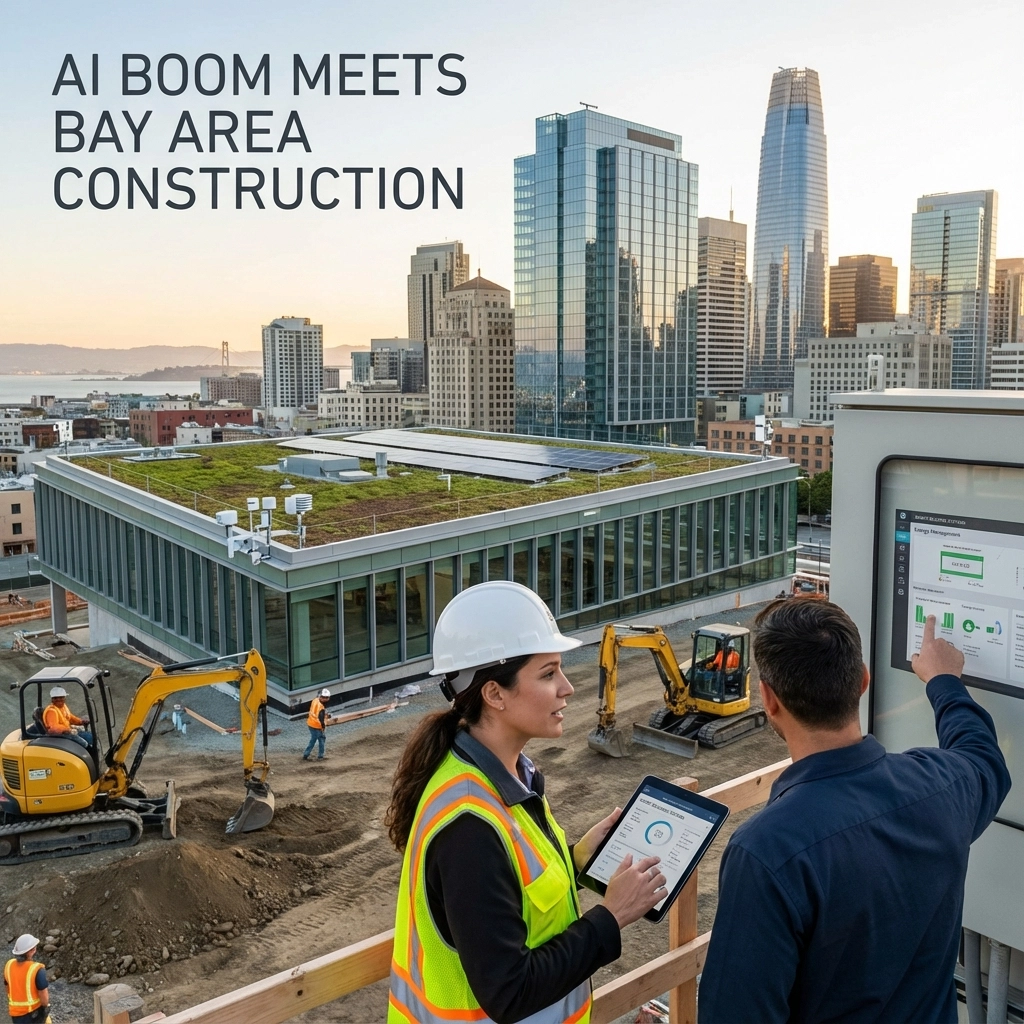
The Bay Area's construction landscape is experiencing a technology revolution that's delivering real returns for property owners who make smart investments. While AI buzzwords flood the market, we're seeing five specific smart building upgrades that consistently pay off in measurable ways, from reduced utility bills to higher tenant satisfaction scores.
As general contractors working across San Francisco, Oakland, and the broader Bay Area, we've witnessed firsthand which technologies deliver genuine ROI versus those that sound impressive but drain budgets. The difference lies in choosing upgrades that address our region's specific challenges: premium energy costs, labor shortages, and increasingly demanding tenants.
1. AI-Powered Building Energy Management Systems (BEMCS)
Bay Area electricity rates continue climbing, making energy management the top priority for smart property investments. AI-powered Building Energy Management and Control Systems optimize heating, cooling, and electrical systems using advanced analytics that traditional thermostats simply can't match.
These systems learn your building's patterns and automatically adjust operations based on occupancy, weather conditions, and usage history. Unlike basic programmable systems, AI-driven BEMCS identify energy waste patterns that human operators typically miss, reducing utility bills by 15-30% in most commercial applications.
Real Bay Area Impact: A client's Oakland office building saw $18,000 in annual energy savings after installing BEMCS integration with their existing HVAC infrastructure. The system now predicts peak usage periods and pre-cools spaces during off-peak hours, avoiding premium rate charges.

2. Predictive Maintenance Through IoT Sensor Networks
Bay Area labor costs make emergency repairs expensive nightmares. Predictive maintenance systems use IoT sensors to monitor equipment performance continuously, alerting you to potential failures weeks before they occur.
Instead of waiting for HVAC units to break down during heat waves or plumbing systems to fail over weekends, sensors track vibration patterns, temperature fluctuations, and performance metrics that indicate developing problems. This shift from reactive to predictive maintenance prevents costly emergency calls and extends equipment lifespan.
Implementation Steps:
- Install sensors on critical systems (HVAC, elevators, pumps)
- Connect to centralized monitoring dashboard
- Set custom alerts based on your building's baseline performance
- Schedule maintenance during optimal timing windows
The average Bay Area property saves $25,000-$40,000 annually by avoiding emergency repairs through predictive maintenance systems.
3. Integrated Smart Building Networks
Modern tenants expect seamless building experiences, and integrated networks deliver by connecting lighting, HVAC, security, and access control into unified systems. Rather than managing separate platforms for each building function, integrated networks optimize performance based on real-time occupancy and learned usage patterns.
When sensors detect someone entering a conference room, the system automatically adjusts lighting and temperature while logging access for security purposes. This interconnected approach reduces energy consumption by eliminating over-conditioning of unoccupied spaces while improving tenant comfort.
Bay Area Advantage: Our region's tech-savvy tenants particularly appreciate buildings that respond intelligently to their presence. Properties with integrated smart networks report 23% higher tenant satisfaction scores and reduced vacancy periods.

4. AI-Driven Tenant Experience Automation
Labor shortages across the Bay Area make it challenging to provide responsive tenant services. AI-driven personalization systems handle routine inquiries, adjust environmental controls based on individual preferences, and streamline facility management workflows.
These systems learn tenant patterns, adjusting temperature and lighting before regular occupants arrive, automatically scheduling elevator maintenance during low-usage periods, and routing service requests to appropriate teams. The result is improved tenant satisfaction with reduced staffing requirements.
Practical Applications:
- Automated response to common tenant questions
- Predictive environmental adjustments
- Intelligent scheduling of building services
- Streamlined maintenance request routing
Properties using AI tenant automation report 40% faster response times to service requests and significant reduction in facility management workload.
5. Real-Time Smart Metering and Energy Monitoring
Bay Area's evolving climate regulations require detailed energy tracking, while rising utility costs demand precise consumption management. Smart metering systems provide real-time visibility into energy usage patterns, enabling both regulatory compliance and cost optimization.
Advanced metering goes beyond basic consumption tracking to identify specific energy waste sources, optimize peak usage timing, and potentially generate revenue through excess energy production. For properties adding solar systems, smart metering becomes essential for maximizing returns.
ROI Components:
- Reduced energy waste through detailed consumption insights
- Optimized utility rate scheduling
- Regulatory compliance documentation
- Foundation for renewable energy integration

Making Smart Upgrades Work in the Bay Area
The key to successful smart building investments lies in phased implementation rather than wholesale system replacement. We recommend starting with energy management systems that deliver immediate utility bill reductions, then expanding to predictive maintenance and integrated networks as ROI validates the approach.
Budget-Friendly Implementation Strategy:
- Begin with one primary system (typically energy management)
- Validate savings over 3-6 months
- Use documented ROI to justify additional upgrades
- Integrate systems gradually to maximize compatibility
Many Bay Area property owners appreciate subscription-based smart building services that spread costs over time while providing ongoing system updates and support.
ROI Timeline and Expectations
Based on our experience across various Bay Area property types, smart building upgrades typically achieve payback within 18-36 months, depending on building size and current efficiency levels.
Commercial Properties: Energy management systems often pay for themselves within 18 months through utility savings alone. When combined with reduced maintenance costs, ROI accelerates significantly.
Multi-Family Residential: Tenant satisfaction improvements from smart building features support premium rents that often exceed upgrade costs within two years.
Mixed-Use Developments: Integrated smart systems provide the most comprehensive returns by optimizing both residential and commercial spaces simultaneously.

Choosing the Right Technology Partner
Smart building success depends heavily on proper installation and ongoing system optimization. We work with property owners to evaluate existing infrastructure, identify the most impactful upgrades, and ensure seamless integration with current building systems.
At Atlas Premier Services & Consultants, we've guided dozens of Bay Area properties through smart building transformations that deliver measurable results. Our approach focuses on practical upgrades that solve real problems rather than impressive technology that provides minimal value.
Frequently Asked Questions
Which smart building upgrade delivers the fastest ROI for Bay Area properties?
AI-powered energy management systems typically provide the quickest returns, often paying for themselves within 18 months through utility bill reductions alone. Bay Area's premium electricity rates make energy optimization particularly valuable.
Can smart building systems integrate with older building infrastructure?
Yes, most modern smart building technologies are designed to work with existing HVAC, electrical, and security systems. Integration typically requires additional sensors and control interfaces rather than complete system replacement.
What ongoing costs should property owners expect with smart building systems?
Most systems include monthly subscription fees for software updates, cloud storage, and technical support, typically ranging from $200-$800 monthly depending on building size and system complexity.
How do smart building upgrades affect property insurance and compliance?
Many insurance providers offer premium discounts for properties with predictive maintenance and automated safety systems. Smart building systems also simplify compliance reporting for energy efficiency regulations.
Ready to explore which smart building upgrades make sense for your Bay Area property? We provide comprehensive consultations that evaluate your current infrastructure and identify the most cost-effective modernization opportunities.
Contact Atlas Premier Services & Consultants at (510) 726-2433 or info@atlas-premier.com to schedule your smart building assessment. Visit our commercial projects portfolio to see examples of successful technology integrations across the Bay Area.
For ongoing insights into Bay Area construction trends and smart building developments, subscribe to our monthly newsletter featuring the latest efficiency strategies and ROI case studies from local property owners.