For nearly four decades, a single shadow cast over a public park has been enough to derail hundreds of homes in San Francisco. It sounds like a plot point from a dystopian novel, but for developers trying to build in the city, it has been a cold, hard reality. Since 1984, the "Shadow Ban" has been weaponized by NIMBYs (Not In My Backyard) to stall, shrink, or kill projects that the city desperately needs to solve its housing crisis.
We are finally seeing a crack in that darkness. Supervisor Bilal Mahmood recently announced the SHADE Act, Slashing Housing Appeals And Delays Everywhere [1]. This isn't just another piece of bureaucratic paper; it is a direct assault on the frivolous appeals that have kept 2,200 housing units in limbo over the last decade (Mahmood, B.) [1]. At Atlas Premier Services & Consultants, we deal with the nuts and bolts of general contracting every day, and we know that time is the ultimate budget killer. This act aims to give that time back to the builders.
In this deep dive, you will learn:
- The mechanical flaws in the current environmental review process that allow "shadow" complaints to be treated like toxic spills.
- The three specific pillars of the SHADE Act and how they streamline the 30-day appeal window.
- Why San Francisco’s status as a regulatory outlier has driven housing costs to record highs while neighboring cities build.
The Problem: When Sunshine Becomes a Weapon
San Francisco is currently paying too high a price for being afraid of its own shadow. Under the current regime, shadows are treated with the same legal weight as toxic waste or hazardous noise levels during the California Environmental Quality Act (CEQA) review process [2]. If a proposed building casts a shadow on a city park, even for a few minutes a day, it opens a door for anyone to file an appeal.
These aren't just "concerned neighbors" looking out for the local playground. Often, these appeals are strategic delays used to force developers into expensive legal battles or to extort community benefit agreements that make projects financially unviable (SPUR) [3]. Over the last 10 years, these "shadow appeals" have stalled or completely killed approximately 2,200 units of housing (Office of Supervisor Bilal Mahmood) [1].
When a project is appealed, the clock stops. Financing becomes uncertain. Material costs rise. For a general contractor, an appeal isn't just a legal hurdle; it’s a disruption that can collapse a carefully managed supply chain and labor schedule. By the time the appeal is resolved, the project might no longer "pencil out."

The Legislation: Defining the SHADE Act
Supervisor Bilal Mahmood’s proposal is designed to stop the bleeding. The SHADE Act doesn't eliminate the city’s ability to study shadows, it simply moves that study out of the realm of environmental "disasters" and back into standard urban planning (San Francisco Board of Supervisors) [4].
Under Proposition K (1984), any shadow cast on a park under the jurisdiction of the Recreation and Park Commission requires a specific set of findings [5]. The SHADE Act preserves the spirit of Prop K but removes the ability for bad-faith actors to use those findings as a basis for a CEQA appeal.
The Three Pillars of Reform:
- Eliminate Shadow as a Reason for CEQA Appeals: By reclassifying shadows as a planning issue rather than a toxic environmental impact, the city removes the legal standing for most shadow-based lawsuits [1].
- Streamline the Review Window: The act slashes the environmental review appeal window from 30 days to 15 days (Mahmood, B.) [1]. This 50% reduction significantly limits the window for opponents to organize frivolous filings.
- Modernize Public Notification: The act simplifies the notification process, reducing the bureaucratic friction that often leads to procedural appeals, lawsuits filed not because the project is bad, but because a notice was posted three inches too low or in the wrong font size [4].
Strategic Context: Why San Francisco is an Outlier
San Francisco is the only major city in California that allows shadows to trigger this specific level of environmental appeal (California Department of Housing and Community Development) [6]. While cities like San Jose and Oakland have modernized their approach to density, San Francisco has remained stuck in a 1980s mindset that treats shadows as an existential threat to urban life.
The state has already begun to crack down. The Housing Accountability Act (HAA) and the Housing Element mandates from the California Department of Housing and Community Development (HCD) have put San Francisco under a microscope [7]. The city is currently required to plan for 82,000 new units by 2031 [8]. Frivolous appeals are the primary obstacle to hitting those numbers. The SHADE Act is a necessary step to align local law with state-level mandates that demand "pro-housing" policies (California HCD) [6].
The Difference Between Planning and CEQA
To understand why the SHADE Act matters, you have to understand the difference between planning and CEQA. Currently, if a building is "too tall" and casts a shadow, it’s treated as an environmental impact under CEQA [2]. This gives any individual or group the power to sue the city to stop the project.
Under the SHADE Act, the Planning Commission still looks at the shadow. They still decide if it’s "too much" for a specific park [4]. However, their decision is a planning decision. If you disagree, you have to argue based on planning merits, not environmental "toxicity." This distinction is critical because it raises the bar for what constitutes a valid appeal.

The Economic Impact of Frivolous Appeals
Every day a project sits in "appeal hell," it costs money. In the Bay Area, construction costs have risen consistently, often outpacing general inflation (Turner & Townsend) [9]. For a 100-unit residential project, a one-year delay can add millions to the total project cost in interest carry and labor price increases alone [10].
| Appeal Metric | Current Process | SHADE Act Proposal | Impact |
|---|---|---|---|
| Appeal Window | 30 Days | 15 Days | 50% Faster [1] |
| Legal Standing | Environmental (CEQA) | Planning/Zoning | Reduced Lawsuits [4] |
| Average Delay | 6–18 Months | 2–4 Months | Lower Soft Costs [10] |
| Units Affected | 2,200 (Past Decade) | 0 (New Shadow-only Appeals) | Increased Supply [1] |
These costs are eventually passed down to the tenants. When we talk about "affordable housing," we have to talk about the cost of building it. You cannot have affordable housing if the process to build it is designed to be as expensive and slow as possible.
Case Example: The 469 Stevenson St. Debacle
The poster child for shadow-based delays is the project at 469 Stevenson Street. Originally proposed as a 495-unit residential tower on what was literally a Nordstrom valet parking lot, the project was derailed in 2021 [11].
The Board of Supervisors voted to overturn the project's environmental impact report (EIR), citing, among other things, potential shadows on a nearby plaza and concerns about gentrification [12]. Despite the site being a parking lot in a transit-rich area, the "shadow" weapon was used to block nearly 500 homes, including dozens of affordable units. It took years of state intervention and a lawsuit from the California HCD to get the project back on track (California HCD) [13].
This single case study represents the exact type of dysfunction the SHADE Act seeks to eliminate. If shadows were treated as a planning issue, 469 Stevenson would likely have broken ground years ago, providing housing for hundreds of San Franciscans during a period of record-low supply.
Timeline of San Francisco’s Housing Appeal Crisis
- June 1984: Voters pass Proposition K, the "Shadow Ban," prohibiting buildings over 40 feet that cast significant shadows on parks [5].
- January 2012: San Francisco’s "Tech Boom" accelerates housing demand; shadow appeals begin to rise as a tactic for project opposition [3].
- October 2019: California passes SB 330 (Housing Crisis Act), attempting to limit the number of public hearings for housing projects [14].
- October 2021: The Board of Supervisors rejects 469 Stevenson Street, citing shadow concerns on a parking lot redevelopment [11].
- August 2022: California HCD launches an unprecedented "Housing Policy Review" of San Francisco’s delays [13].
- January 2023: San Francisco officially adopts its Housing Element, committing to 82,000 new units by 2031 [8].
- March 2024: State Senator Scott Wiener’s SB 423 takes effect, further stripping local power to block housing that meets zoning [15].
- May 14, 2026: Supervisor Bilal Mahmood introduces the SHADE Act to finalize the removal of shadows as a CEQA weapon [1].
What Smart Critics Argue
Some critics argue that the SHADE Act will lead to a "darkening" of the city’s green spaces. They claim that shadows reduce the usability of parks, which are essential for mental health in a dense urban environment (Friends of SF Parks) [12].
The Response: The SHADE Act does not repeal Prop K. The Planning Commission still maintains the authority to regulate building heights to protect parks. What the act does is remove the ability for individuals to sue the city over those shadows using environmental law as a pretext. It returns the power to the elected and appointed officials of the city, rather than the most litigious neighbor.
Other critics worry that shortening the appeal window to 15 days is an "anti-democratic" move that prevents low-income communities from organizing (Council of Community Housing Organizations) [11].
The Response: A 15-day window is standard in many other high-growth jurisdictions. Furthermore, the act’s pillar on modernizing notification ensures that communities are informed sooner and more clearly, making the 15-day window more effective than the current confusing 30-day slog.

Key Takeaways for Developers and Property Owners
- Predictability is Coming: The primary goal of the SHADE Act is to make the development timeline predictable. If you follow the rules, you should be able to build.
- Shadows are Planning, Not Poison: Moving shadows out of CEQA reduces the threat of long-term litigation.
- Transit-Oriented Density Wins: The act specifically benefits infill development near transit where height is most necessary.
- The 15-Day Sprint: Developers will need to be even more proactive in their community outreach, knowing the appeal window is shorter.
- CEQA Reform is Incremental: While this doesn't fix every CEQA abuse, it removes one of the most common "low-hanging fruit" tactics used by opponents.
- State Pressure is Working: Local supervisors are moving because the state has made it clear that "business as usual" is no longer an option.
- Cost Savings: Reducing delays of 6–12 months can save hundreds of thousands in interest and carry costs for mid-sized projects.
How to Take Action
If you are a property owner, developer, or a resident tired of the housing shortage, here is how you can engage:
- At Work: If you are in the AEC (Architecture, Engineering, Construction) industry, brief your project teams on the 15-day window. Speed up your internal environmental review prep.
- At Home: Review the "Shadow Ban" maps for your neighborhood. Understand how current height limits are affecting the property values and density of your area.
- In the Community: Support local YIMBY (Yes In My Backyard) groups that are lobbying for the SHADE Act’s passage at the Board of Supervisors.
- In Civic Life: Write to your District Supervisor. Specifically mention that you support treating shadows as a planning issue rather than an environmental impact.
- With Your Professionals: Contact Atlas Premier Services & Consultants. We can help you navigate the development services and project management hurdles that remain in San Francisco’s complex landscape.
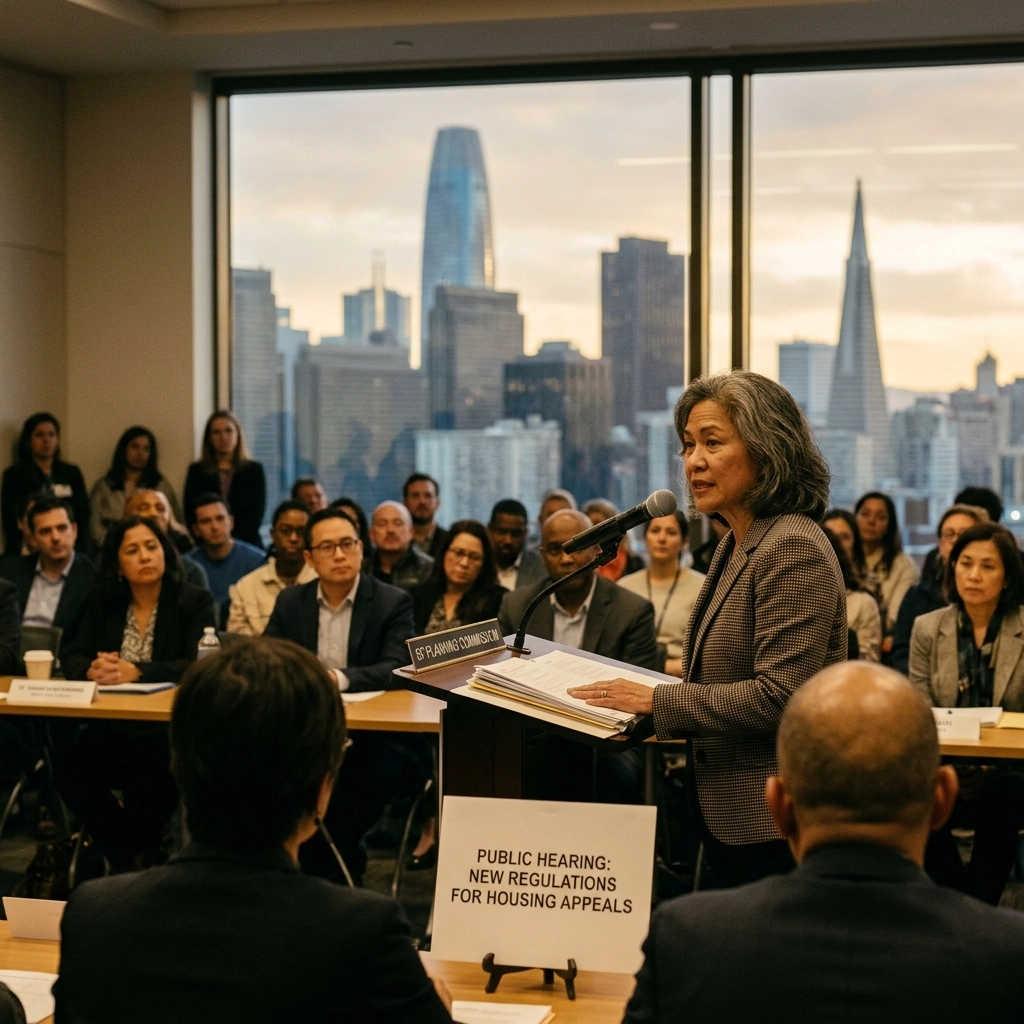
- Extra Step: Attend a Planning Commission hearing and speak specifically in favor of projects that are being targeted by shadow appeals. Your voice balances the "naysayers."
FAQ
Does the SHADE Act allow buildings to be built as high as developers want?
No. Buildings must still adhere to the San Francisco General Plan and local zoning laws regarding height and bulk. The act only changes how appeals against those buildings are handled [4].
Will my local park become pitch black?
No. Prop K remains in effect. The Planning Commission still reviews shadow studies to ensure parks remain sunny and usable. The SHADE Act just prevents these studies from being used in CEQA lawsuits [5].
What exactly is a "shadow appeal"?
It is a legal challenge filed against a project’s environmental certification, claiming that the "impact" of the building's shadow was not properly studied or mitigated under state law [2].
How does this affect small renovations?
The SHADE Act primarily impacts larger multi-family developments over 40 feet, as these are the projects usually targeted by shadow complaints. Smaller residential kitchen and bath or interior renovations are rarely affected by shadow laws.
When will the SHADE Act take effect?
The legislation has been introduced and must move through the Board of Supervisors’ committee process before a final vote and mayoral signature.
Atlas Premier Services & Consultants is a premier general contracting and project management firm dedicated to high-performance commercial and residential development, management, janitorial, maintenance, etc. From commercial offices to complex medical facilities, we bring a standard of excellence to every square foot we manage.
Service Areas: San Francisco, Oakland, San Jose, and the greater Bay Area.
Atlas Premier Services and Consultants
Strategic Solutions. Trusted Execution.
Lake Merritt Plaza
1999 Harrison Street, 18th Floor
Oakland, CA 94612
(510) 726-2433
info@atlas-premier.com
www.atlas-premier.com
Ready to move your project from concept to completion?
Contact Atlas Premier Services and Consultants today.
Sources
[1] Office of Supervisor Bilal Mahmood, "The SHADE Act: Slashing Housing Appeals and Delays Everywhere," May 2026, https://sfbos.org/mahmood-legislation, Accessed May 14, 2026.
[2] California Governor's Office of Planning and Research, "CEQA Guidelines: Aesthetics and Shadows," 2024, https://opr.ca.gov/ceqa/, Accessed May 14, 2026.
[3] SPUR, "Public Space and Private Development: The Shadow Debate," June 2020, https://www.spur.org/publications, Accessed May 14, 2026.
[4] San Francisco Planning Department, "Proposed Legislative Amendments: Shadow and Environmental Review," April 2026, https://sfplanning.org/legislative-updates, Accessed May 14, 2026.
[5] San Francisco City Charter, "Proposition K: The Shadow Ban of 1984," Section 295, https://codelibrary.amlegal.com/codes/san_francisco, Accessed May 14, 2026.
[6] California Department of Housing and Community Development, "San Francisco Housing Policy Review," October 2023, https://www.hcd.ca.gov/, Accessed May 14, 2026.
[7] California Legislative Information, "Housing Accountability Act (HAA)," Government Code Section 65589.5, https://leginfo.legislature.ca.gov/, Accessed May 14, 2026.
[8] San Francisco Planning Department, "2023-2031 Housing Element Update," January 2023, https://sfplanning.org/housing-element, Accessed May 14, 2026.
[9] Turner & Townsend, "International Construction Market Survey: San Francisco Region," 2025, https://www.turnerandtownsend.com/, Accessed May 14, 2026.
[10] Terner Center for Housing Innovation, "The Cost of Building Housing in California," UC Berkeley, March 2024, https://ternercenter.berkeley.edu/, Accessed May 14, 2026.
[11] San Francisco Chronicle, "Why SF Supervisors Blocked 500 Homes at 469 Stevenson," October 2021, https://www.sfchronicle.com/, Accessed May 14, 2026.
[12] Friends of San Francisco Parks, "Shadow Analysis and Park Usability Standards," January 2025, https://www.sf-parks.org/, Accessed May 14, 2026.
[13] California Department of Justice, "Attorney General Bonta Files Suit Against San Francisco for Housing Violations," May 2024, https://oag.ca.gov/news/, Accessed May 14, 2026.
[14] California Legislative Information, "SB 330: Housing Crisis Act of 2019," https://leginfo.legislature.ca.gov/, Accessed May 14, 2026.
[15] Office of Senator Scott Wiener, "SB 423: Streamlining Housing Approvals," 2023, https://sd11.senate.ca.gov/news/, Accessed May 14, 2026.
Disclaimer: This content is for general informational purposes only and does not constitute legal, financial, engineering, construction, regulatory, or other professional advice. Reading this content does not create a client or contractual relationship with Atlas Premier Services & Consultants. Because every project and property is different, consult qualified professionals regarding your specific circumstances. Atlas Premier Services & Consultants makes no warranties regarding the accuracy or completeness of this information and is not responsible for third-party content or references. Testimonials, examples, and case studies are illustrative only and do not guarantee similar results.